
All The Tools You Need To Teach a Middle School Life Science Curriculum
Engaging, NGSS-aligned, TEKS-aligned and Florida Standards-aligned middle school life science curriculum designed to simplify planning and increase student engagement. Explore complete units, hands-on labs, and ready-to-use lesson plans for grades 6–8.
Grab Your Free Pacing Guide!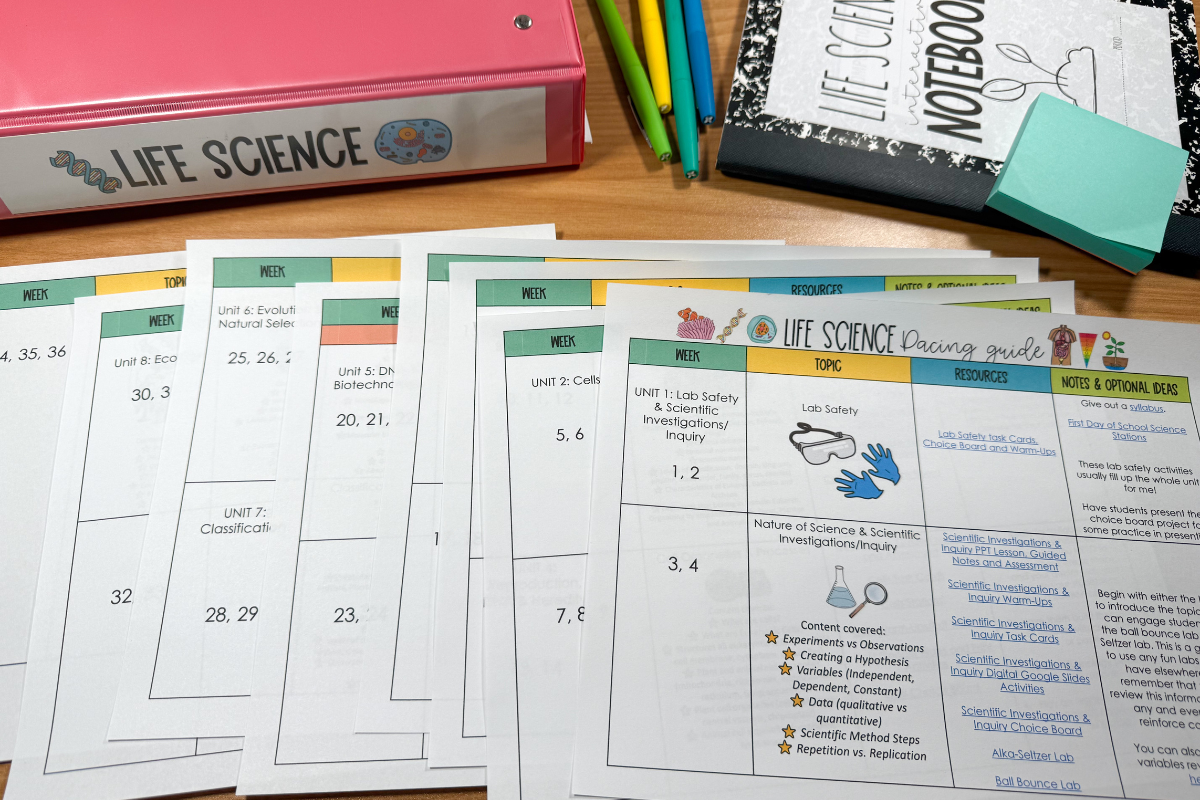
What Topics are Included in This Middle School Life Science Curriculum?
1. Cell Characteristics & Cell Theory
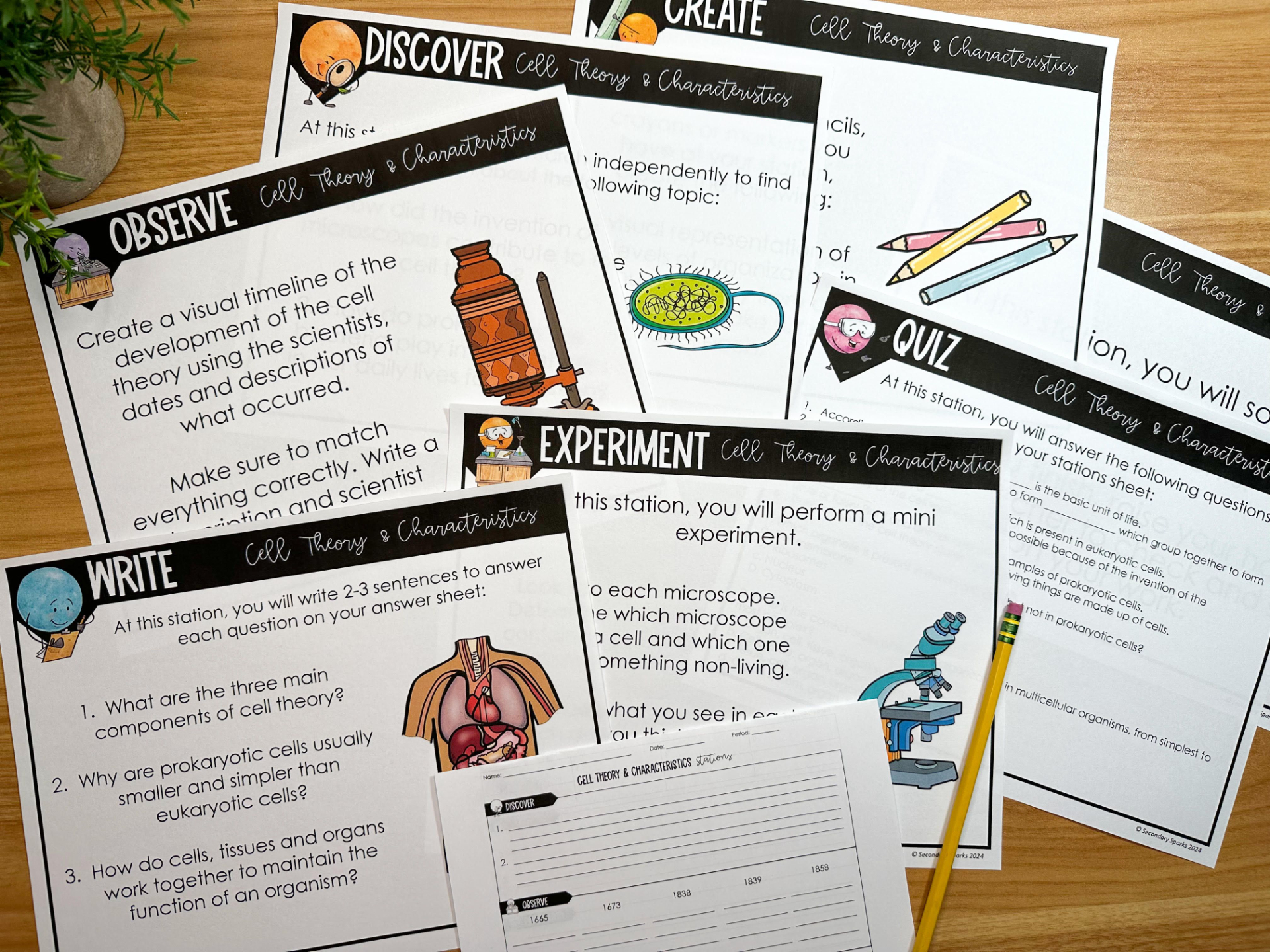
Cell theory and cell characteristics help students understand the fundamental building blocks of life. In these middle school life science lessons, students explore key concepts such as the three parts of cell theory, characteristics of living organisms, unicellular vs multicellular organisms, and the basic structure and function of cells. Through engaging cell theory activities for middle school, interactive labs, and guided investigations, students develop a strong foundation in understanding how all living things are made of cells and how cells function to support life.
What to Teach
⭐ Cell Theory and it's 3 parts
⭐ Contributing scientists (Robert Hooke, Anton Van Leeuwenhoek, Matthias Schleiden, Theodor Schwann & Rudolf Virchow
⭐ Characteristics of Prokaryotes
⭐ Characteristics of Eukaryotes
⭐ Levels of Organization (Cells -> Tissue -> Organ -> Organ System -> Organism)
Cell Theory Teaching Resources
🔬Cell Theory Lesson, Guided Notes and Assessment
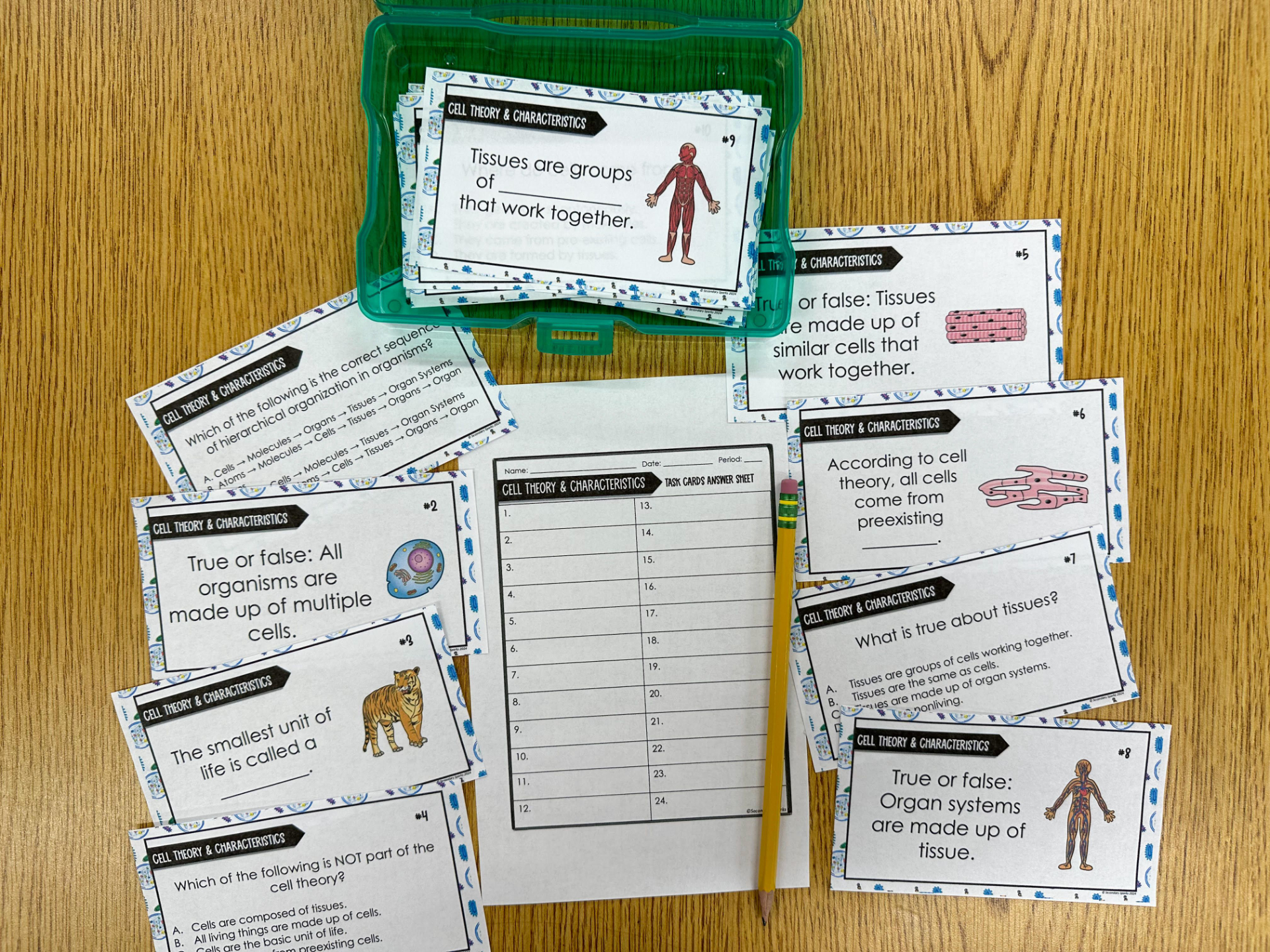
🔬Cell Theory Task Cards
🔬Cell Theory Stations
🔬Cell Theory Warm Ups/Exit Tickets
🔬Cell Theory Choice Board Activity
🔬Cell Theory Activities for Google Slides
Cell Theory Teaching Tips
Make sure students know the three statements of the cell theory and make sure they have these memorized.
Also make sure students know the difference between a eukaryotic cell and a prokaryotic cell during this unit.
Have students identify what is made up of cells and what isn't. Abiotic vs. biotic.
Cell Theory Standards Alignment:
Cell Theory NGSS Standards:
- MS-LS1-1 Conduct an investigation to provide evidence that living things are made of cells (unicellular or multicellular).
-
MS-LS1-3 Use argument supported by evidence for how the body is a system of interacting subsystems (cells → tissues → organs).
Cell Theory TEKS Standards:
-
6.10(A) Describe cell theory and explain that all organisms are composed of one or more cells.
-
6.10(C) Compare prokaryotic and eukaryotic cells.
Cell Theory Florida B.E.S.T Standards:
- SC.6.L.14.2 Investigate and explain that all living things are composed of cells.
2. Cell Organelles and Organelle Functions
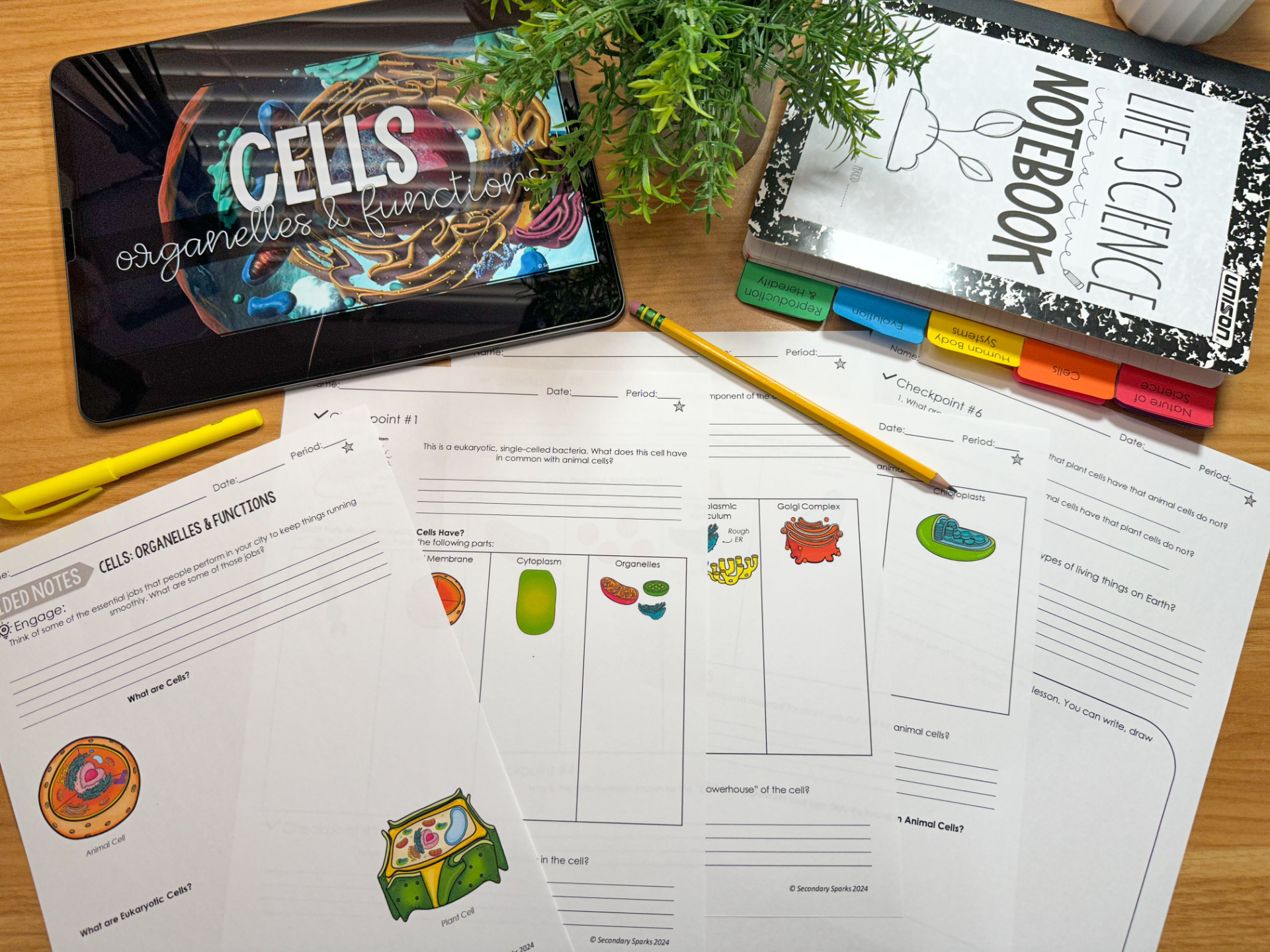
Plant and animal cell organelles help students understand how different parts of a cell work together to maintain life. In these middle school cell structure lessons, students identify and compare organelles such as the nucleus, mitochondria, cell membrane, chloroplasts, and vacuole while exploring differences between plant and animal cells. These cell organelle activities for middle school include hands-on labs, digital resources, and interactive models that help students visualize cell function and understand how each organelle contributes to the survival of the cell.
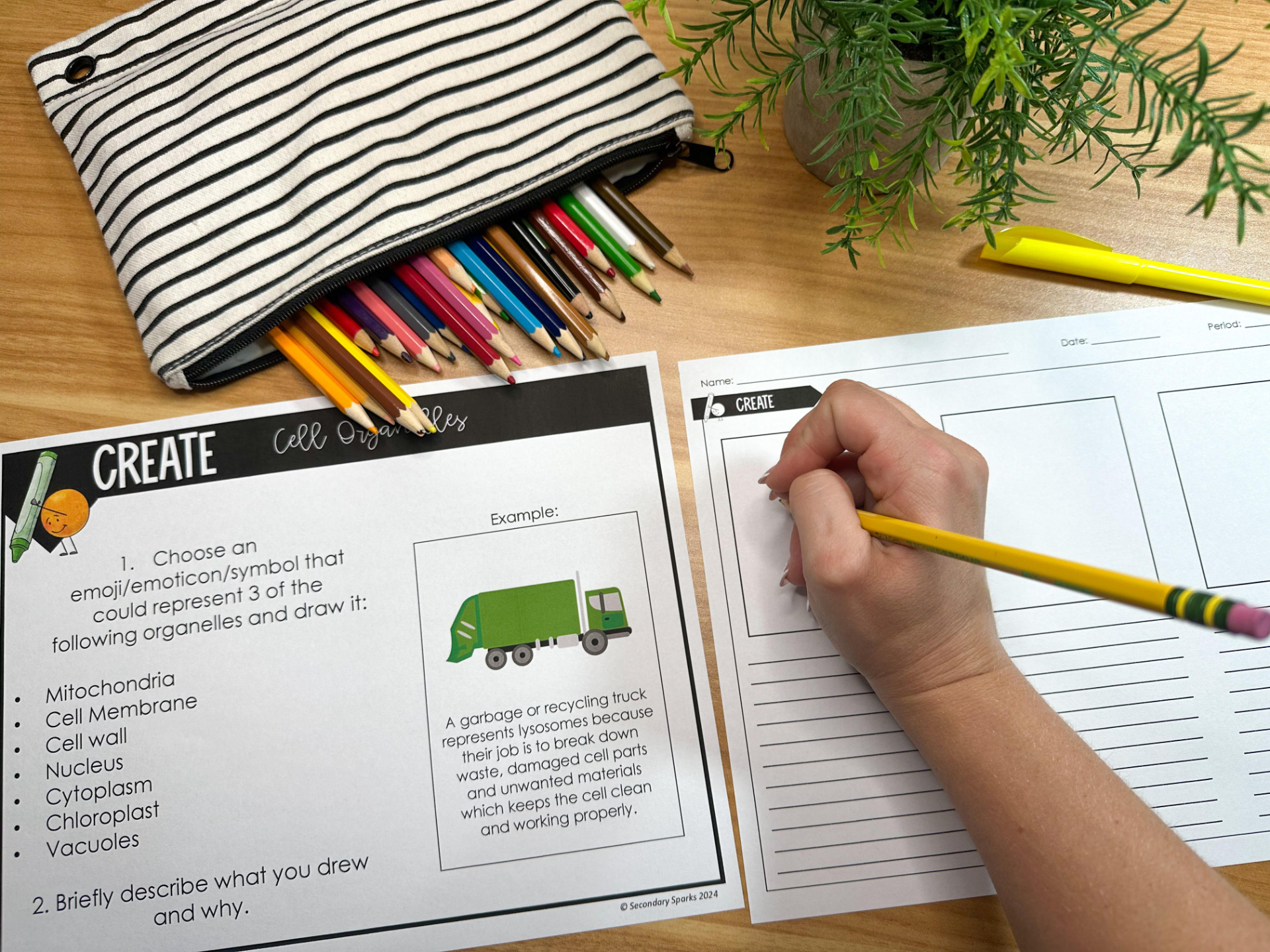
What to Teach
⭐ What are cells?
⭐ What are Eukaryotic Cells?
⭐ Structures all eukaryotic cells have (DNA, cell membrane, cytoplasm, organelles)
⭐ Plant and animal cell organelles (mitochondria, ribosomes, endoplasmic reticulum, Golgi apparatus)
⭐ Plant cell organelles (cell wall, large central vacuole, chloroplast)
⭐ Animal cell organelles (centrioles, lysosomes)
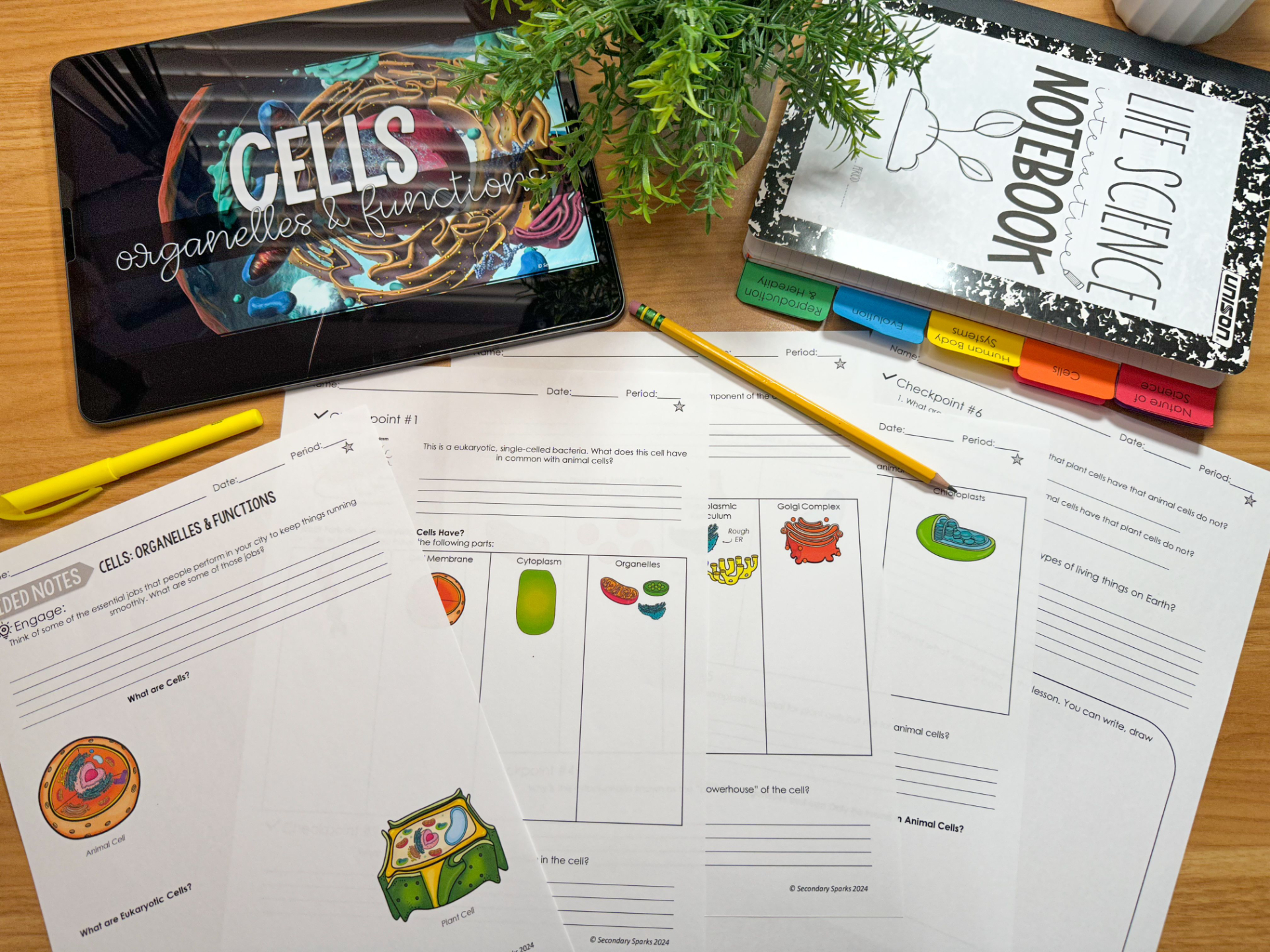
Cell Organelles Teaching Resources
🔬Cell Organelles Lesson, Guided Notes and Assessment
🔬Cell organelles Task Cards
🔬Cell Organelles Stations
🔬Cell Organelles Warm Ups/Exit Tickets
🔬Cell Organelles Choice Board Activity
🔬Cell Organelles Activities for Google Slides
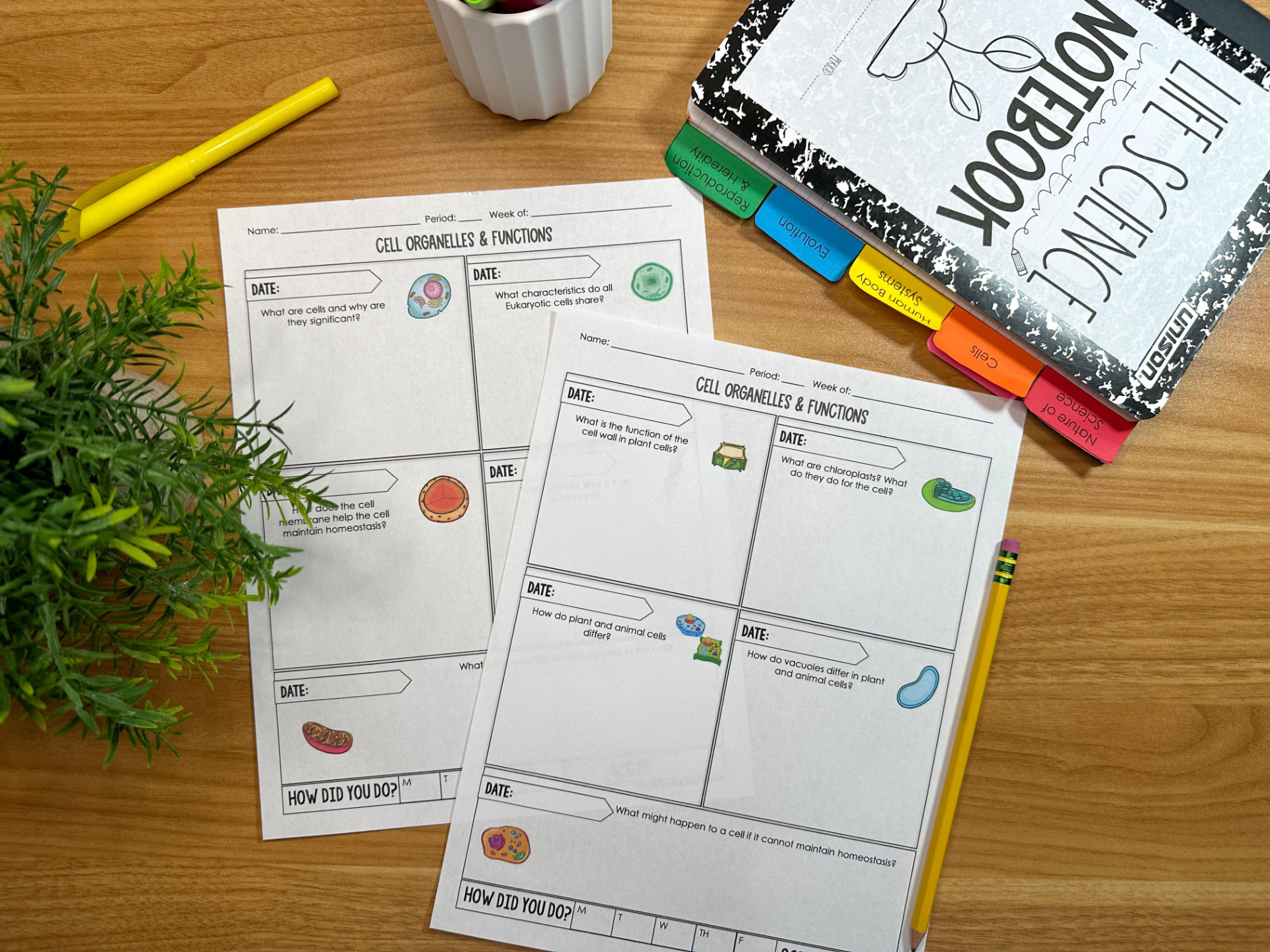
Cell Organelles Teaching Tips
If you use NGSS, TEKS or Florida standards, the main structures to focus on are:
-
Nucleus
-
Mitochondria
-
Ribosomes
-
Cytoplasm
-
Vacuoles
-
Cell Wall
-
Chloroplasts
-
Cell membrane
Cell Organelles Standards Alignment
Cell Organelles NGSS Standards
-
MS-LS1-2: Develop and use a model to describe the function of a cell as a whole and ways parts of cells contribute to the function.
Cell Organelles TEKS Standards
-
7.12(B): Identify and describe the structure and function of cell parts, including organelles.
Cell Organelles Florida Standards
-
SC.6.L.14.2: Investigate and explain the components of cells and their functions.
-
SC.6.L.14.3: Recognize and explore how cells of all organisms undergo similar processes to maintain homeostasis.
3. Human Body Systems
Human body systems help students understand how the body functions as a coordinated system of interacting parts. In these middle school life science lessons, students explore major body systems such as the circulatory, respiratory, digestive, nervous, and skeletal systems, and how they work together to maintain homeostasis. Through engaging human body system activities for middle school, labs, and real-world connections, students learn how structure relates to function and how different systems depend on one another for survival.
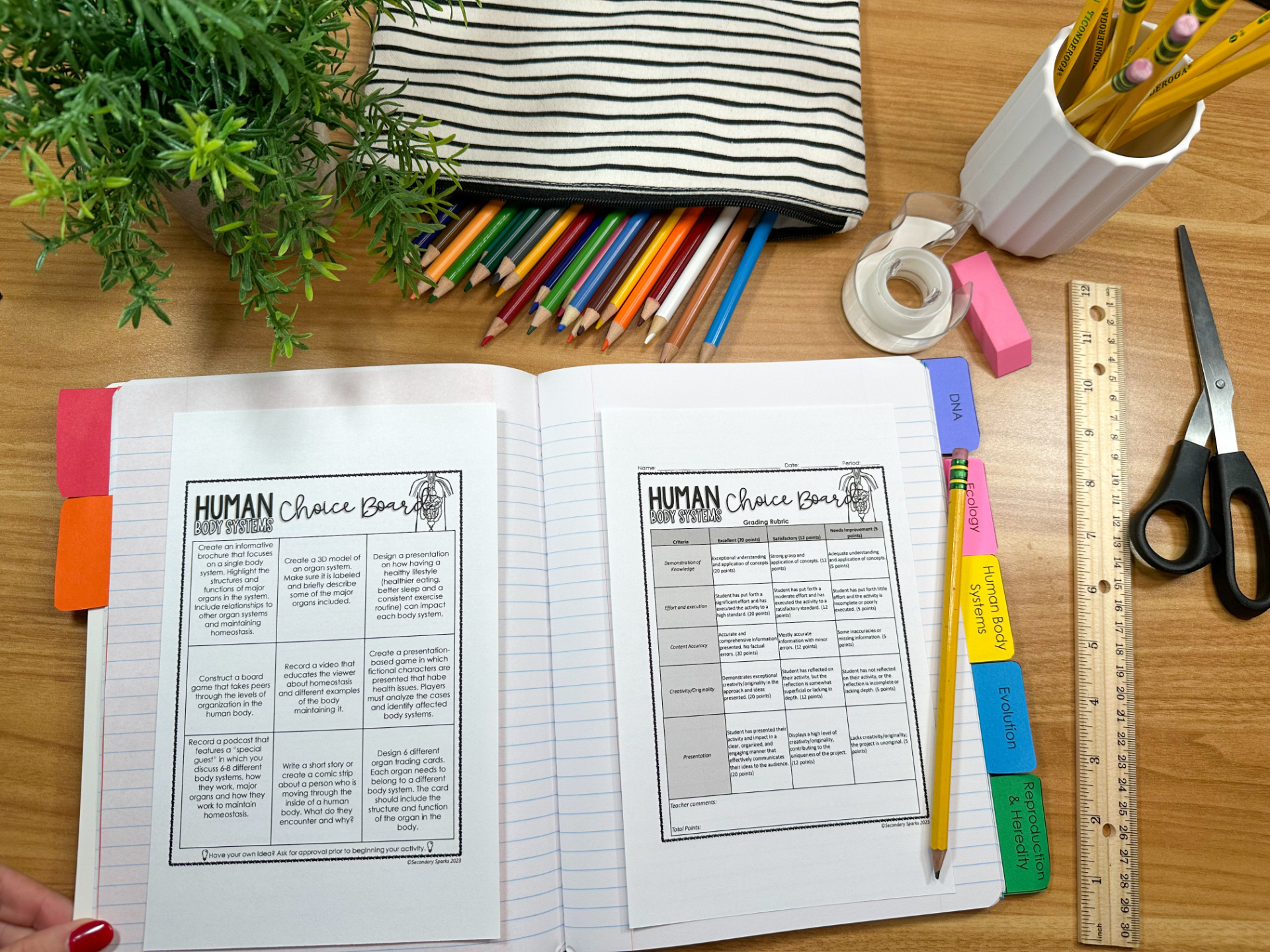
What to Teach
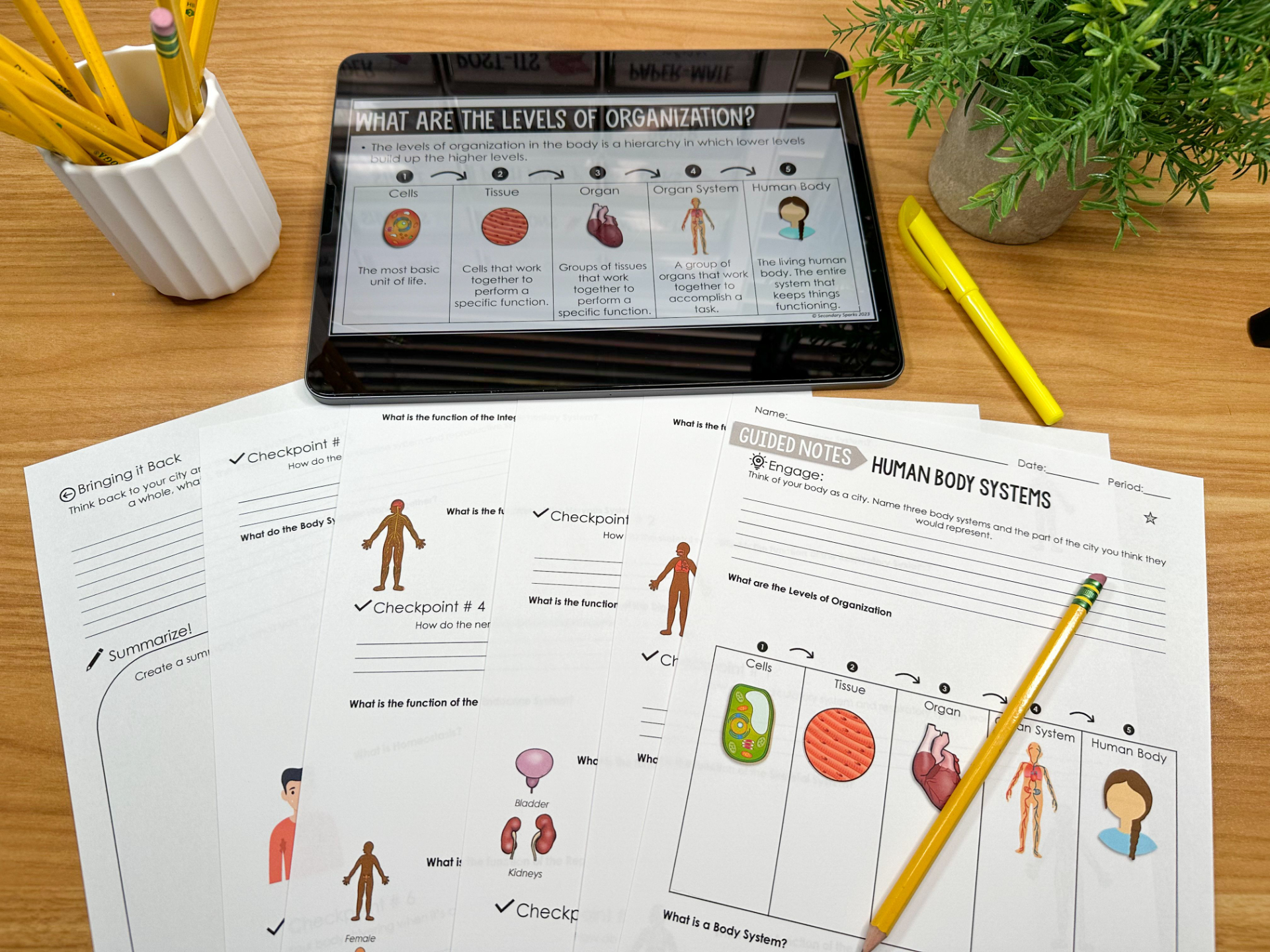
⭐Levels of organization
⭐Circulatory System
⭐Respiratory System
⭐Skeletal System
⭐Muscular System
⭐Digestive System
⭐Excretory System
⭐Integumentary System
⭐Nervous System
⭐Endocrine System
⭐Reproductive System
⭐Homeostasis
⭐Body Systems Working Together
Human Body Systems Teaching Resources
🔬Human Body Systems Guided Notes and Assessment
🔬Human Body Systems Task Cards
🔬Human Body Systems Stations
🔬Human Body Systems Warm Ups/Exit Tickets
🔬Human Body Systems Choice Board Activity
🔬Human Body Systems Activities for Google Slides
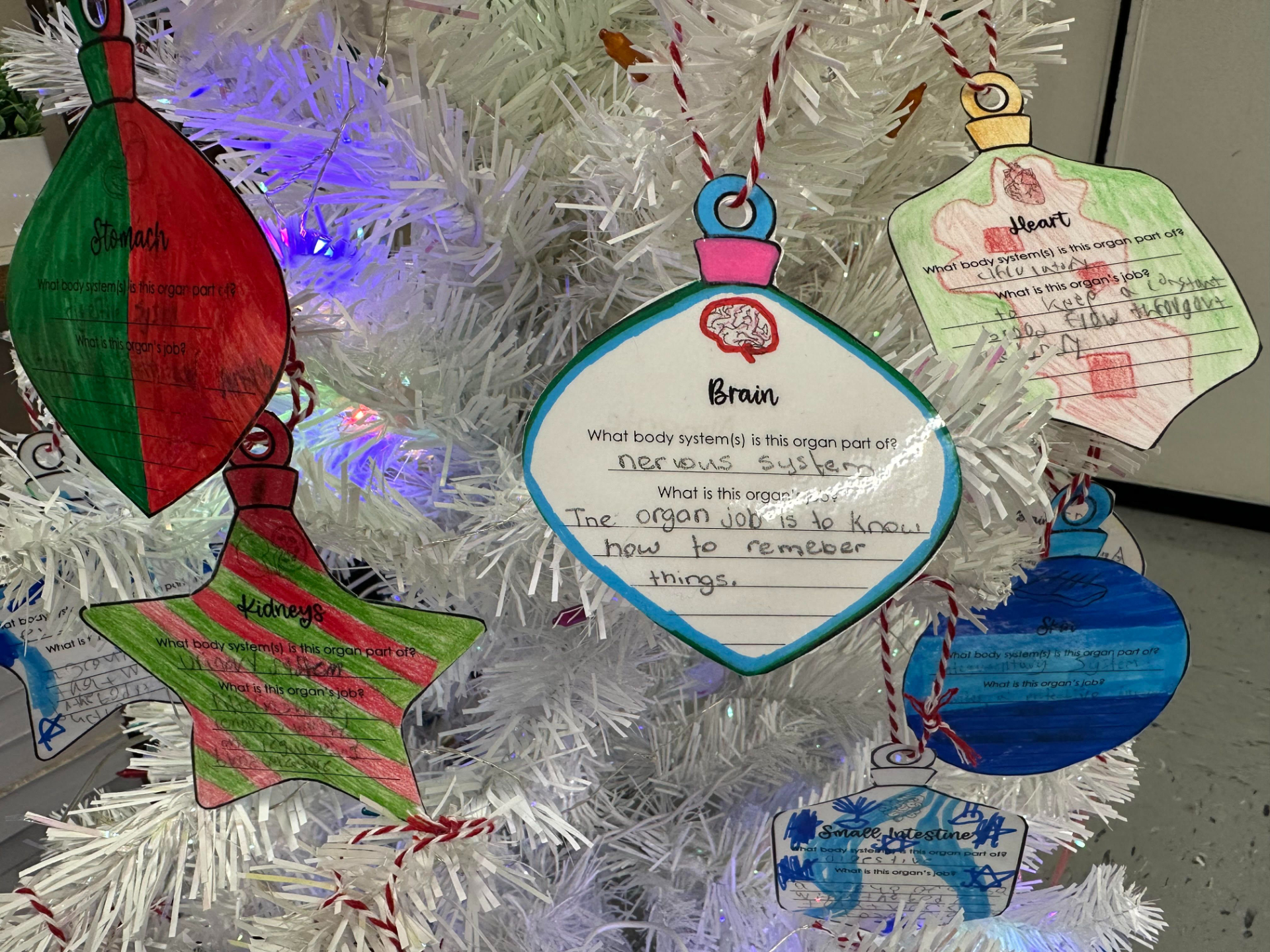
🔬Human Body Systems Organ Ornaments
Human Body Systems Teaching Tips
Focus on how body systems work together rather than getting into the details and complexities of how each system works.
- Support & Movement: Skeletal and muscular systems.
- Transport & Regulation: Circulatory and respiratory systems.
- Processing & Waste: Digestive and excretory systems.
Then, focus on how these systems work together to maintain homeostasis in the body.
Review levels of organization. Cells to tissues to organs to organ systems to organism.
Human Body Systems Standards Alignment
Human Body Systems NGSS Standards
-
MS-LS1-3: Use argument supported by evidence for how the body is a system of interacting subsystems composed of groups of cells.
Human Body Systems TEKS Standards
-
7.11(A): Examine the interactions of body systems, including the circulatory, respiratory, and digestive systems.
Human Body Systems Florida Standards
-
SC.6.L.14.5: Identify and investigate the general functions of the major systems of the human body.
-
SC.6.L.14.6: Explain how the human body systems work together to maintain homeostasis.
4. Mitosis and Meiosis
Mitosis and meiosis help students understand how cells divide and how genetic information is passed on. In these middle school cell division lessons, students compare the stages and outcomes of mitosis and meiosis, including chromosome number, genetic variation, and the role each process plays in growth and reproduction. These mitosis vs meiosis activities for middle school include interactive models, guided notes, and visual simulations that help students clearly distinguish between the two processes.
What to Teach
⭐ Cell Division
⭐ Reasons for Cell division
⭐ Interphase
⭐ Phases of mitosis
⭐ Phases of meiosis I and II
Mitosis and Meiosis Teaching Resources
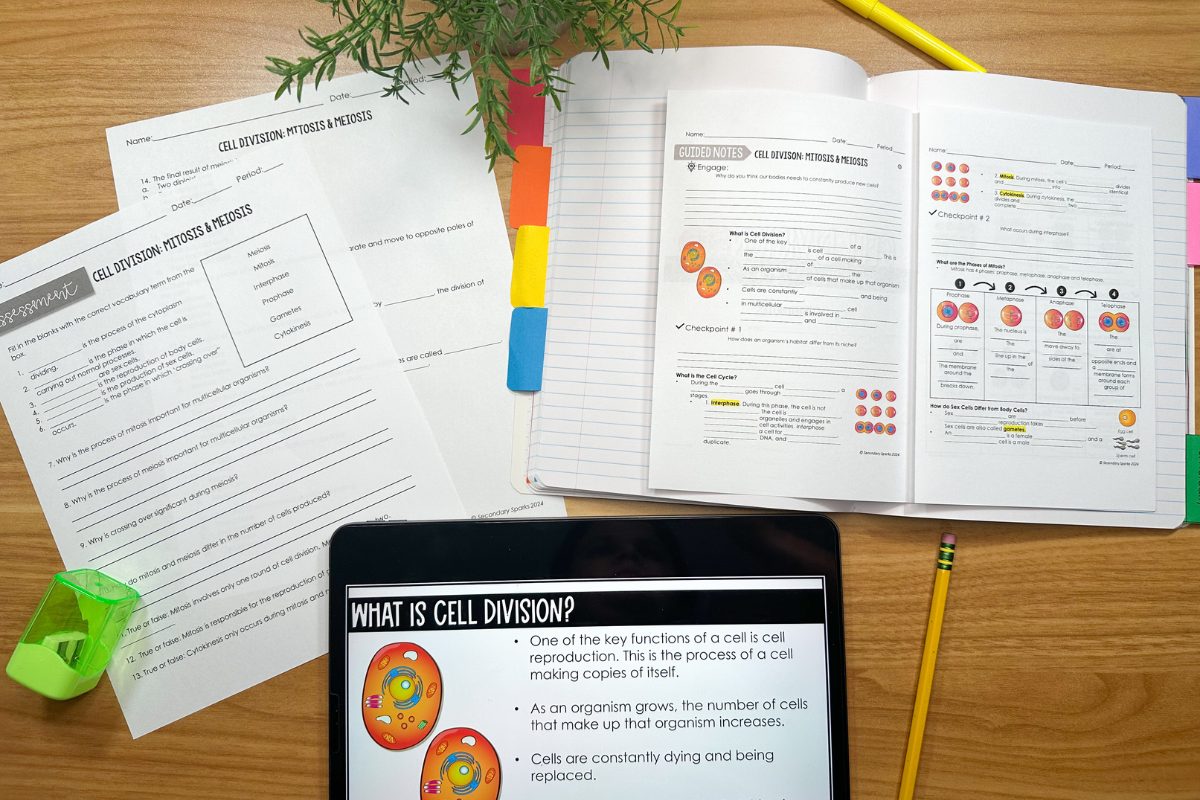
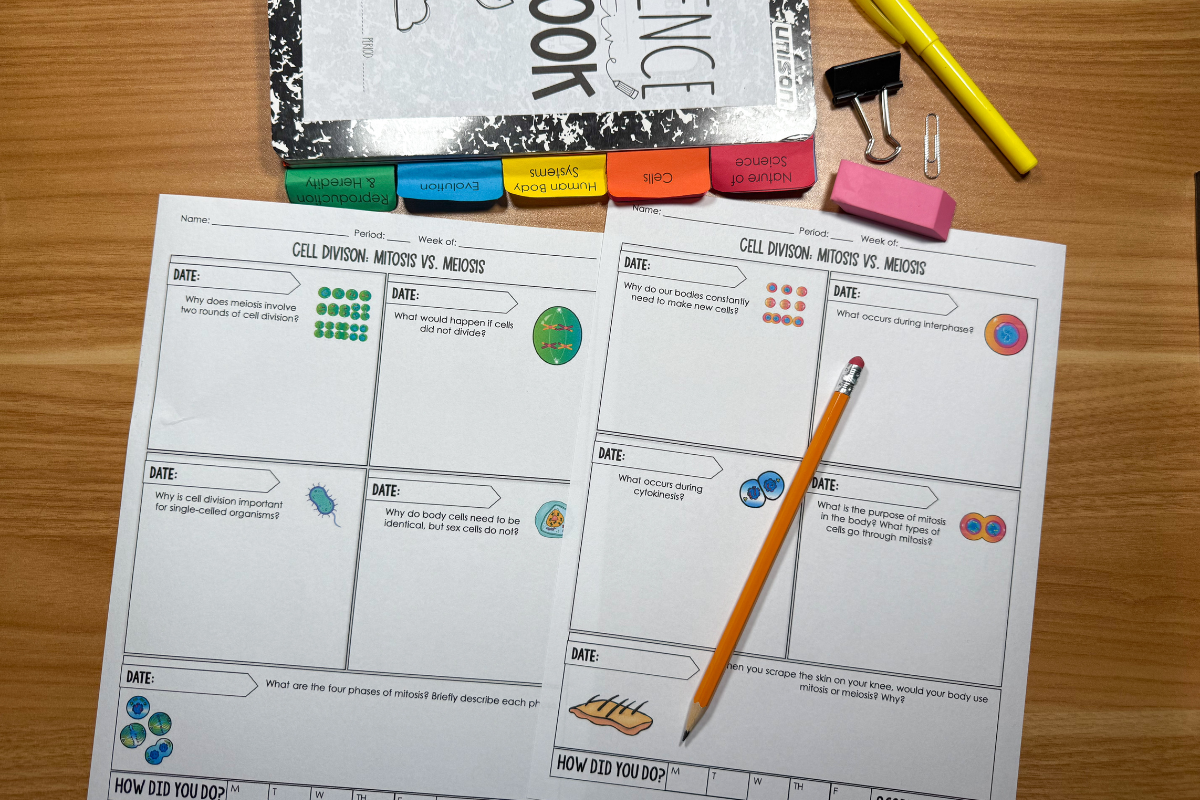
🔬Mitosis and Meiosis Guided Notes and Assessment
🔬Mitosis and Meiosis Warm Ups/Exit Tickets
🔬Mitosis and Meiosis Activities for Google Slides
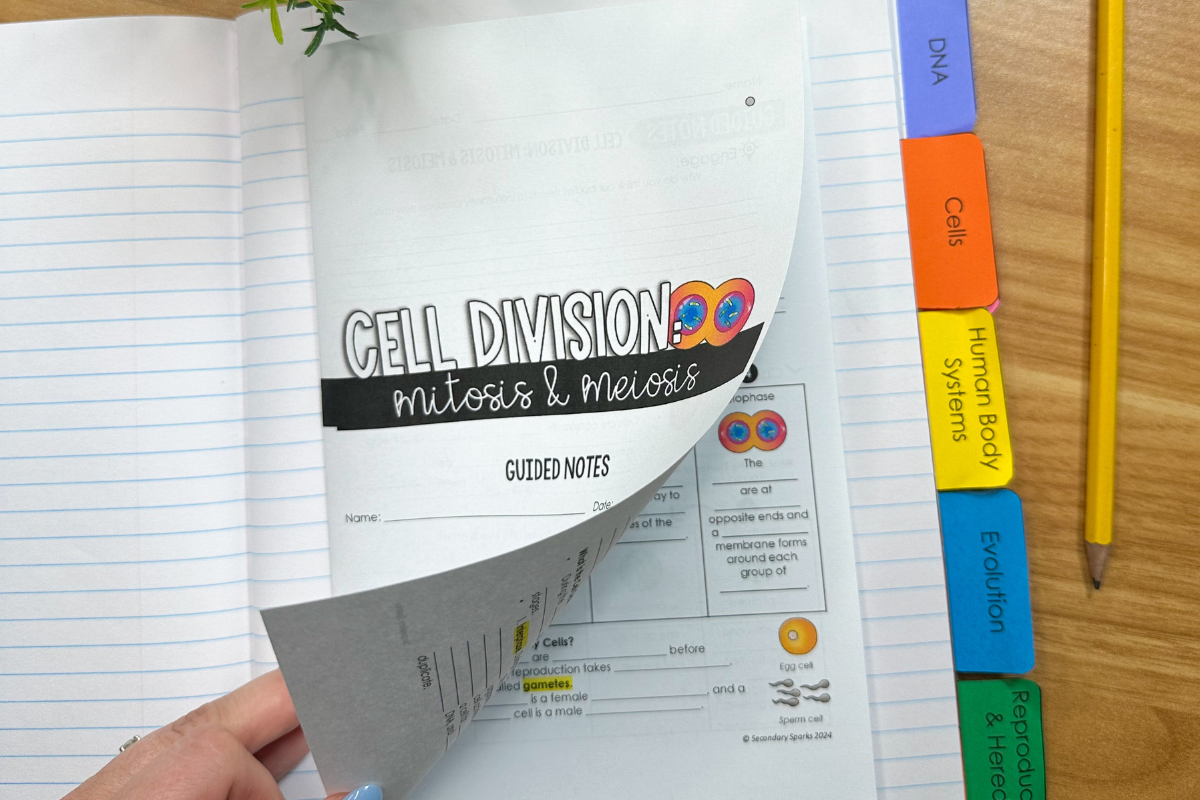
Mitosis and Meiosis Teaching Tips
In middle school, students don't need to know the detailed processes of mitosis and meiosis.
They should know in which scenarios each are used for. Mitosis for somatic (body cells) division and asexual reproduction and meiosis for gamete (sex cell) division for sexual reproduction.
Mitosis vs Meiosis Standards Alignment
Cell Division NGSS Standards
-
MS-LS1-4: Use argument based on empirical evidence and scientific reasoning to support an explanation for how characteristic animal behaviors and specialized plant structures affect the probability of successful reproduction.
-
MS-LS3-2: Develop and use a model to describe why asexual reproduction results in offspring with identical genetic information and sexual reproduction results in offspring with genetic variation.
Cell Division TEKS Standards
-
7.14(A): Define heredity as the passage of genetic instructions from one generation to the next generation.
-
7.14(B): Compare sexual and asexual reproduction and explain how they result in different genetic outcomes.
Cell Division Florida Standards
-
SC.7.L.16.4: Recognize and explore the general processes of mitosis, including the phases and results.
-
SC.7.L.16.3: Compare and contrast the general processes of sexual reproduction and asexual reproduction.
5. Asexual and Sexual Reproduction
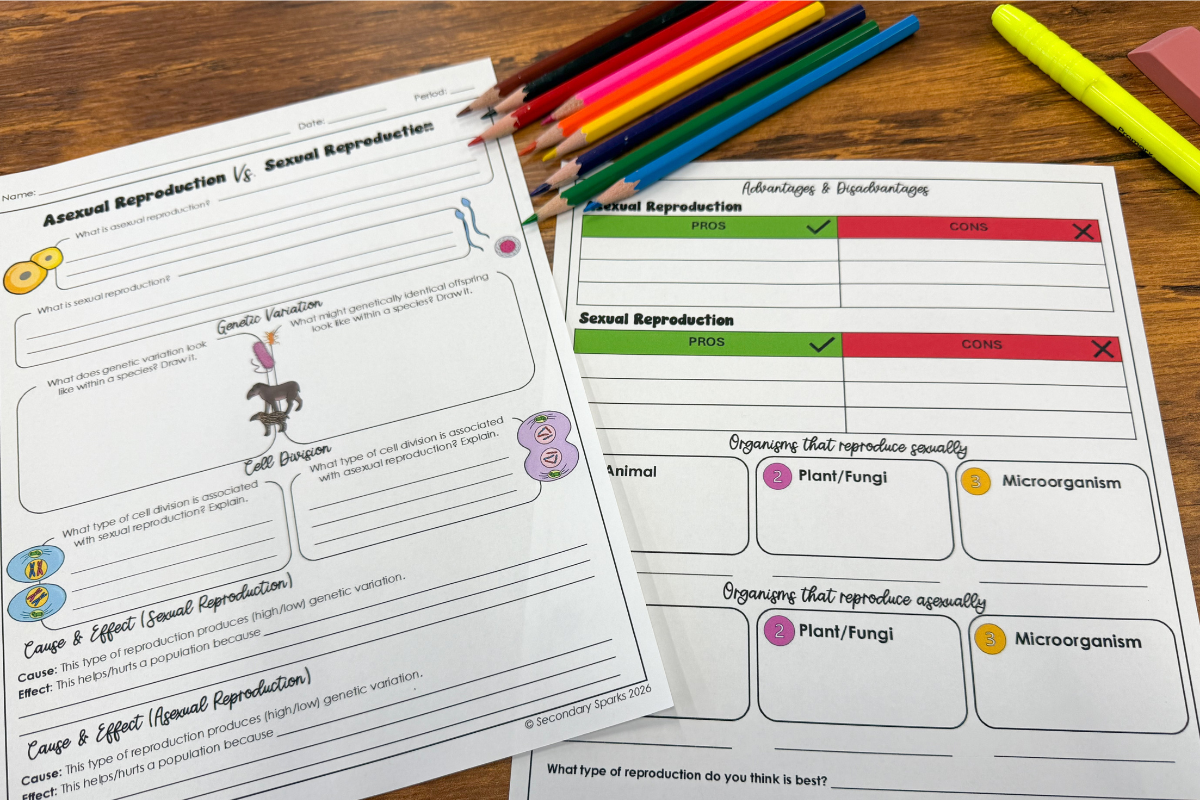
Asexual and sexual reproduction help students understand how organisms reproduce and pass on genetic information. In these middle school life science lessons, students explore key differences between asexual and sexual reproduction, including genetic variation, advantages and disadvantages, and real-world examples in plants and animals. Through engaging reproduction activities for middle school, students analyze how different reproductive strategies impact survival and diversity within species.
What to Teach
⭐ Sexual Reproduction (Meiosis, feralization, zygote)
⭐ Genetic variation
⭐ Asexual Reproduction
⭐ Budding
⭐ Binary fission
⭐ Spores
⭐ Vegetative reproduction
⭐ Advantages of sexual reproduction
⭐ Disadvantages of sexual reproduction
⭐ Advantages of asexual reproduction
Asexual vs Sexual Reproduction Teaching Resources
🔬Organism Reproduction Guided Notes and Assessment
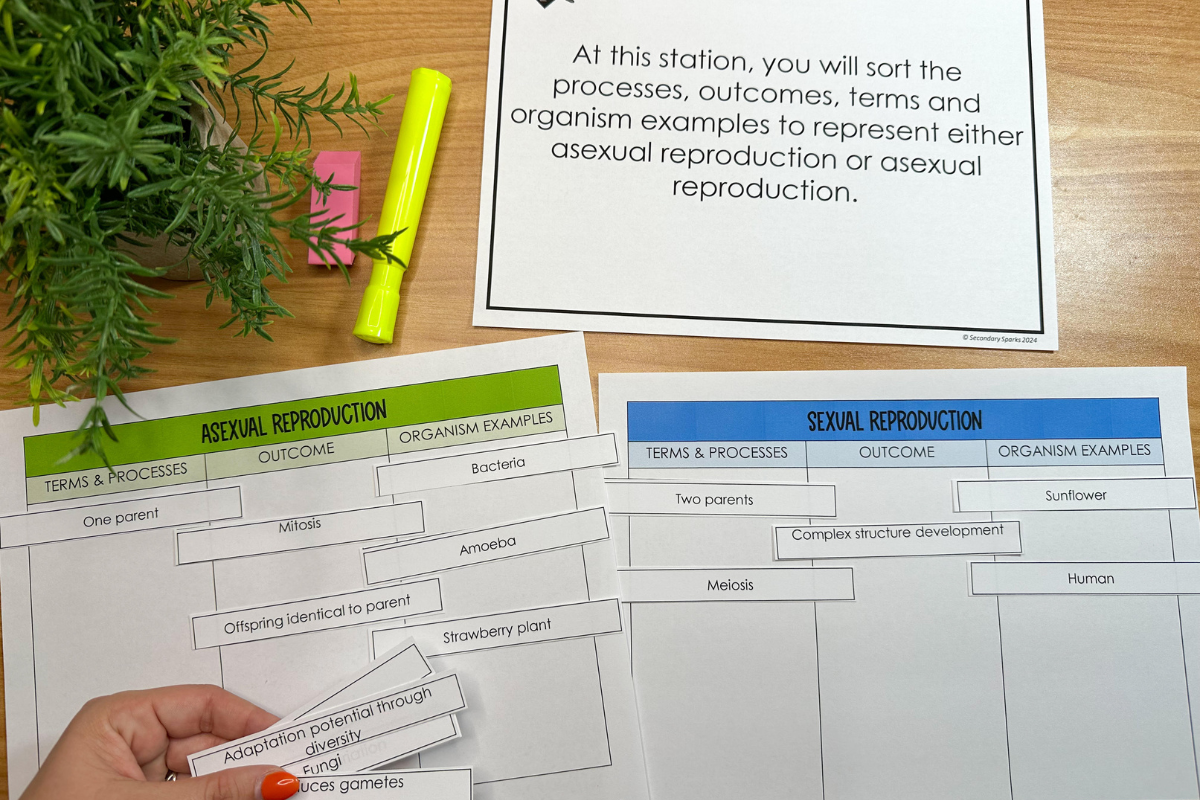
🔬Asexual vs Sexual Reproduction Task Cards
🔬Asexual and Sexual Reproduction Stations
🔬Reproduction of Organisms Warm Ups/Exit Tickets
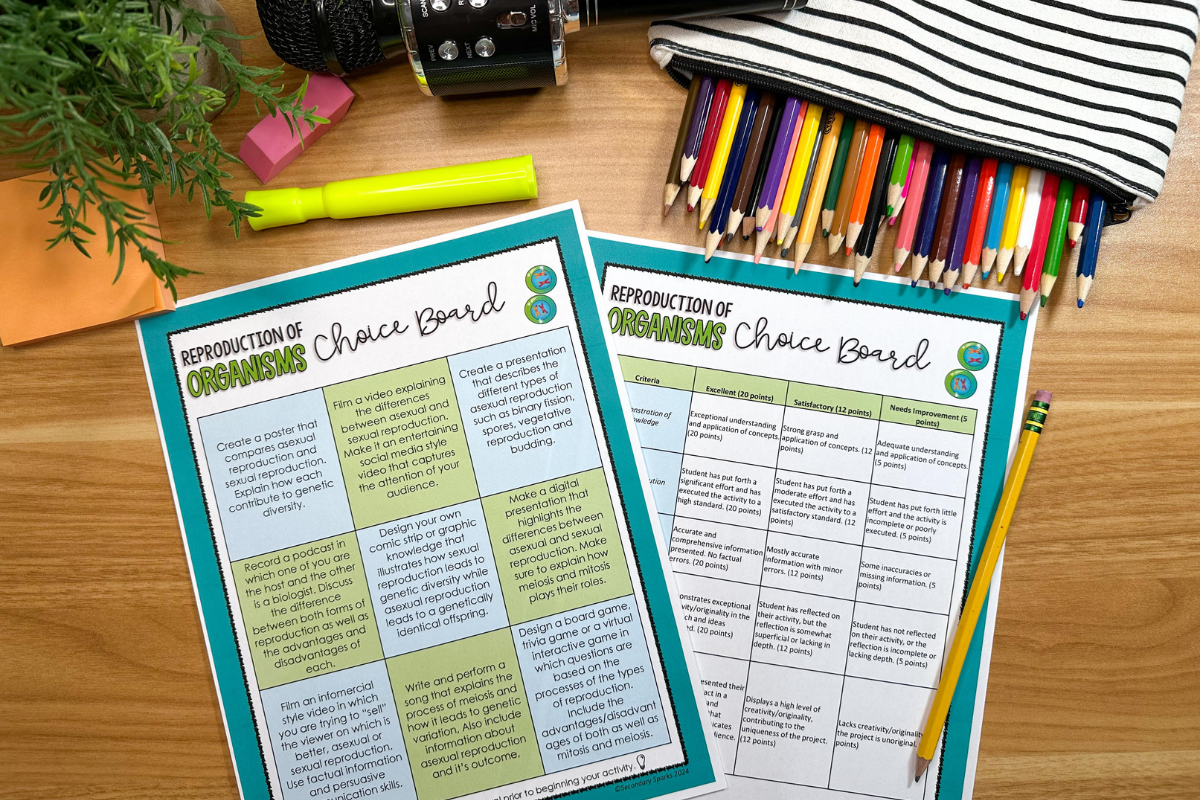
🔬Asexual and Sexual Reproduction Choice Board Activity
🔬Reproduction of Organisms Activities for Google Slides
🔬Asexual vs Sexual Reproduction Comparison Activity
Reproduction of Organisms Teaching Tips
Students should be able to identify and explain:
1. When an organism uses mitosis for asexual reproduction and types of asexual reproduction (budding, vegetative, spores)
2. When an organism uses meiosis for sexual reproduction
3. The advantages and disadvantages of asexual reproduction
4. The advantages and disadvantages of sexual reproduction
5. Genetic diversity in an ecosystem
Asexual vs Sexual Reproduction Alignment:
Reproduction NGSS Standards
-
MS-LS3-2: Develop and use a model to describe why asexual reproduction results in identical offspring and sexual reproduction results in genetic variation.
Reproduction TEKS Standards
-
7.14(B): Compare sexual and asexual reproduction and describe the differences in genetic outcomes.
Reproduction Florida Standards
-
SC.7.L.16.3: Compare and contrast the general processes of sexual and asexual reproduction.
6. Heredity and Inheritance
Heredity and inheritance help students understand how traits are passed from one generation to the next. In these middle school genetics lessons, students explore key concepts such as dominant and recessive traits, genotype vs phenotype, and how to use Punnett squares to predict genetic outcomes. These heredity and Punnett square activities for middle school include practice problems, real-world scenarios, and inquiry-based investigations that help students master genetic probability and trait inheritance.
What to Teach
⭐Heredity
⭐Traits
⭐Genetics
⭐Gregor Mendel
⭐Genes
⭐Alleles
⭐Phenotype
⭐Genotype
⭐Dominant traits
⭐Recessive traits
⭐Homozygous and heterozygous
⭐Incomplete dominance
⭐Codominance
⭐Environmental Factors on traits
⭐Sex-linked traits
⭐Punnett Squares
⭐Pedigrees
Heredity and Inheritance Teaching Resources
🔬DNA and Genetic Mutations Guided Notes and Assessment
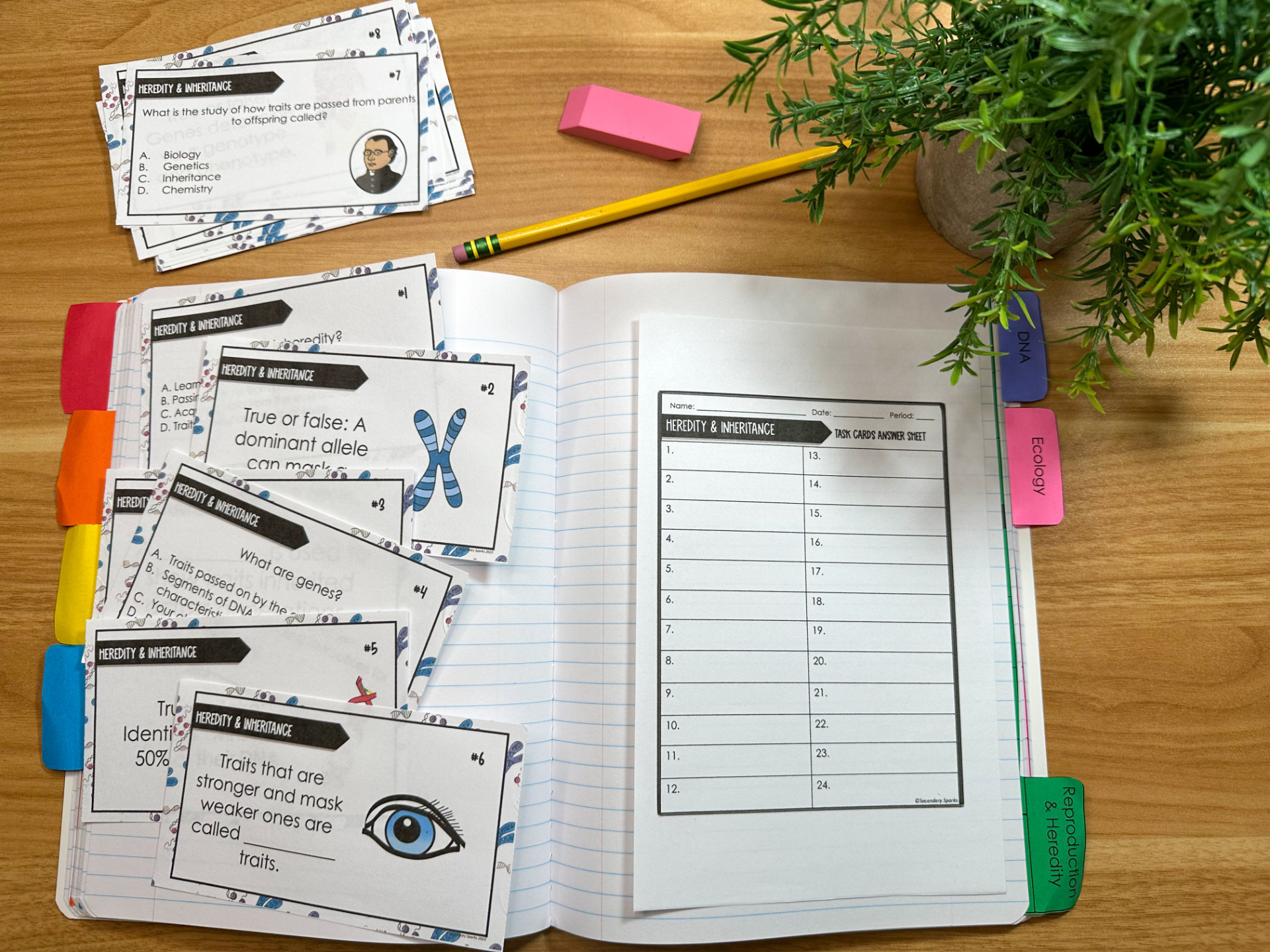
🔬DNA and Genetic Mutations Task Cards
🔬DNA and Genetic Mutations Stations
🔬DNA and Genetic Mutations Warm Ups/Exit Tickets
🔬DNA and Genetic Mutations Choice Board Activity
🔬DNA and Genetic Mutations Activities for Google Slides
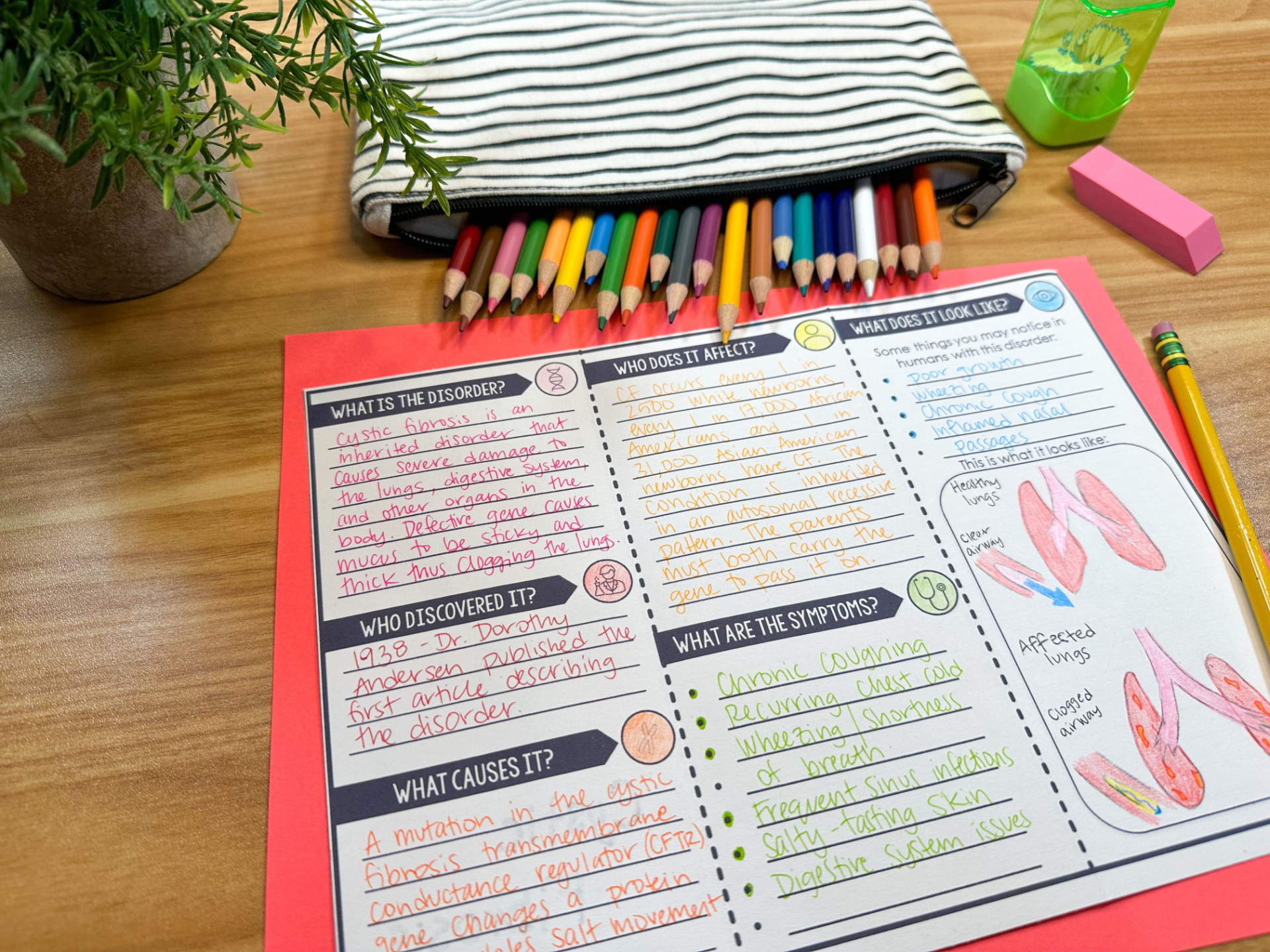
🔬Genetics Diseases and Disorders Research Activity Brochure
Reproduction of Organisms Teaching Tips
Explain that DNA is like an instruction manual. Students will visualize it much better.
-
DNA = instruction manual
-
Genes = individual instructions
-
Chromosomes = chapters
-
Mutations = typos in the instructions
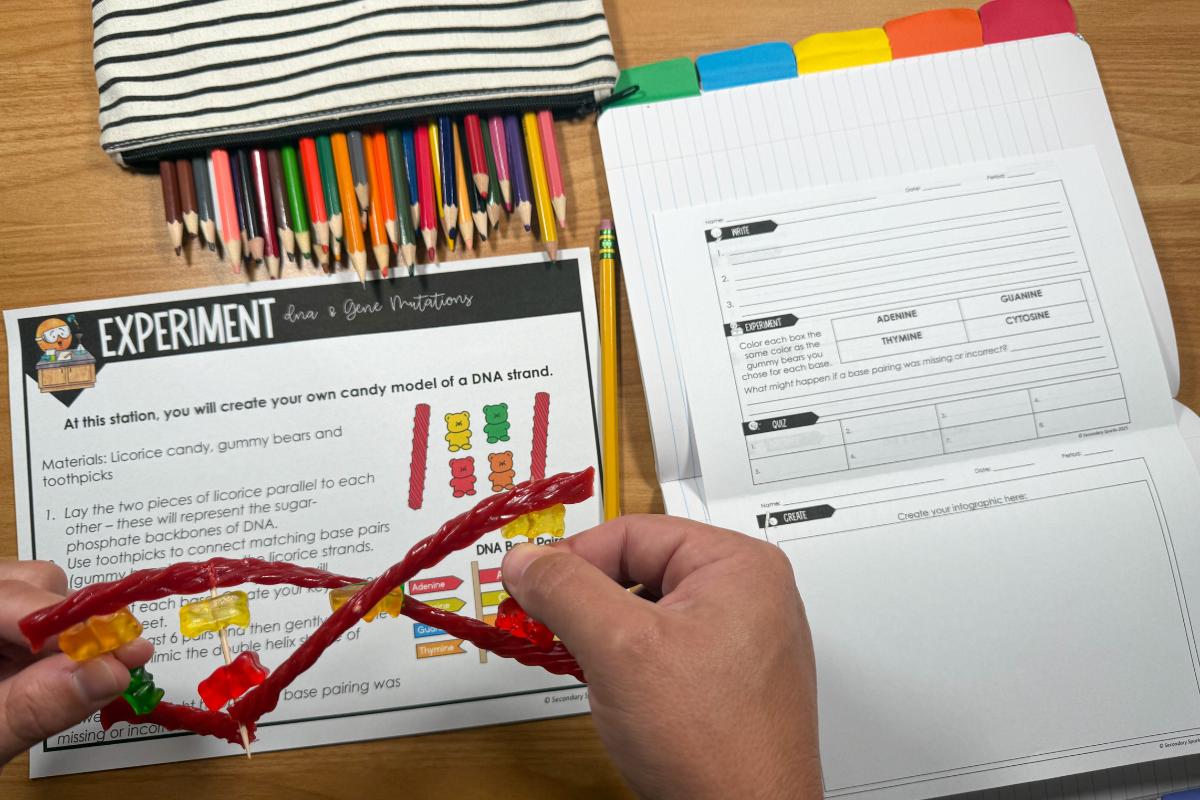
Model DNA with simple materials:
-
colored beads
-
pipe cleaners
-
paper strips
-
candy (the middle school favorite
Remove the stigma attached to the word "mutation." Some are beneficial. Such as:
-
A mutation allows a bug to blend into leaves.
-
A mutation makes a rabbit brighter colored.
Heredity, Inheritance & Punnett Squares Standards Alignment:
Heredity and Genetics NGSS Standards
-
MS-LS3-1: Develop and use a model to describe why structural changes to genes may affect proteins and may result in harmful, beneficial, or neutral effects to the structure and function of the organism.
-
MS-LS3-2: Develop and use a model to describe why sexual reproduction results in genetic variation.
Heredity and Genetics TEKS Standards
-
7.14(C): Predict and describe outcomes of genetic combinations involving dominant and recessive traits.
-
7.14(D): Explain how traits are inherited using models such as Punnett squares.
Heredity and Genetics Florida Standards
-
SC.7.L.16.1: Understand and explain that every organism requires a set of instructions that specifies its traits, and that DNA contains genes located in chromosomes.
-
SC.7.L.16.2: Determine the probabilities for genotype and phenotype combinations using Punnett squares and pedigrees.
7. DNA and Genetic Mutations
Biotechnology and artificial selection help students understand how humans influence genetic traits in organisms. In these middle school life science lessons, students explore topics such as genetic engineering, selective breeding, GMOs, cloning, and CRISPR technology. These biotechnology activities for middle school include real-world applications and ethical discussions that help students understand how science is used to solve problems and impact society.
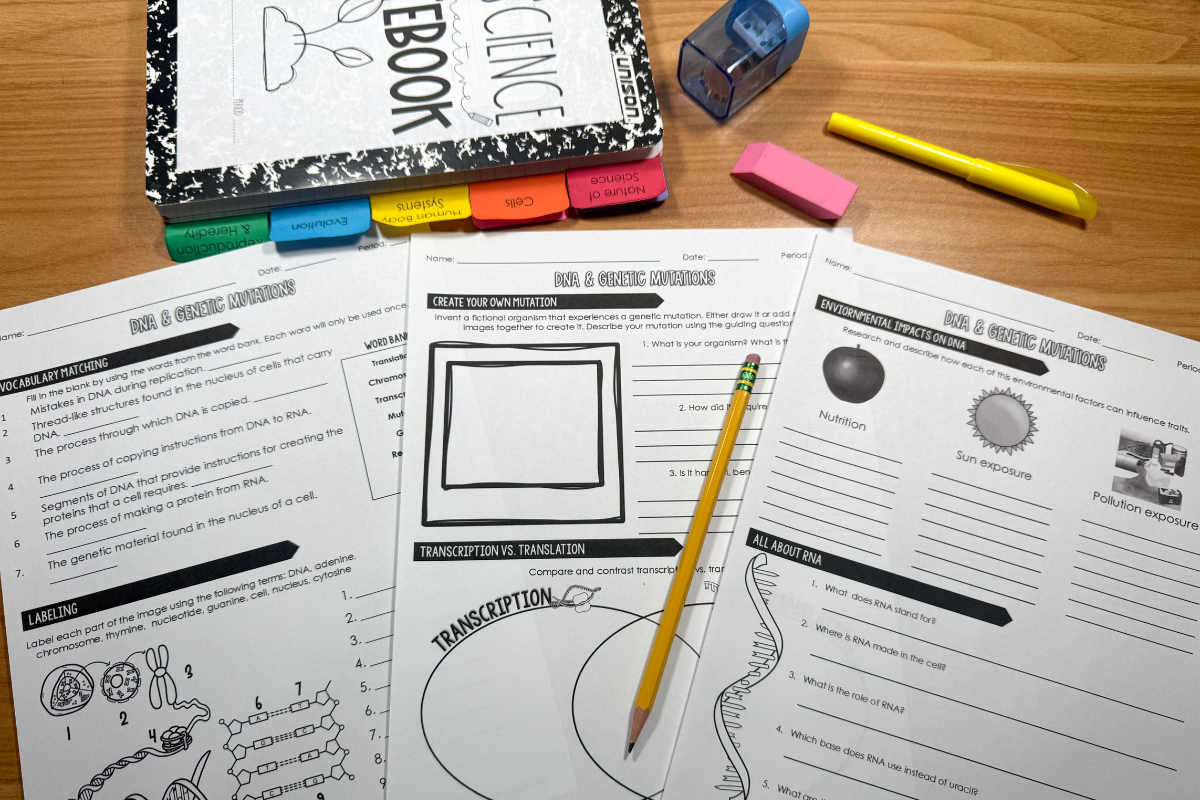
DNA and genetic mutations help students understand how genetic information is stored, copied, and changed. In these middle school DNA lessons, students explore DNA structure, genes, chromosomes, and how mutations can affect traits and organisms. Through engaging DNA activities for middle school and real-world examples, students learn how mutations can be beneficial, harmful, or neutral and how they contribute to genetic diversity.
What to Teach
⭐ What is DNA?
⭐ Who Discovered DNA? (Scientists include Rosalind Franklin, Maurice Wilkins, Alfred Hershey, Martha Chase, James Watson and Francis Crick)
⭐ Structure of DNA
⭐ Four nitrogen bases
⭐ DNA replication
⭐ Mutations
⭐ Protein synthesis
⭐ RNA (mRNA, tRNA and rRNA)
⭐ Transcription
⭐ Translation
⭐ Genetic factors that determine traits
⭐ Environmental factors that determine traits
DNA and Genetic Mutations Teaching Resources
🔬Heredity and Genetics Guided Notes and Assessment
🔬Inheritance and Heredity Task Cards
🔬Genetics and Punnett Squares Reproduction Stations
🔬Genetics Warm Ups/Exit Tickets
🔬Heredity and Genetics Choice Board Activity
🔬Heredity and Punnett Squares Activities for Google Slides
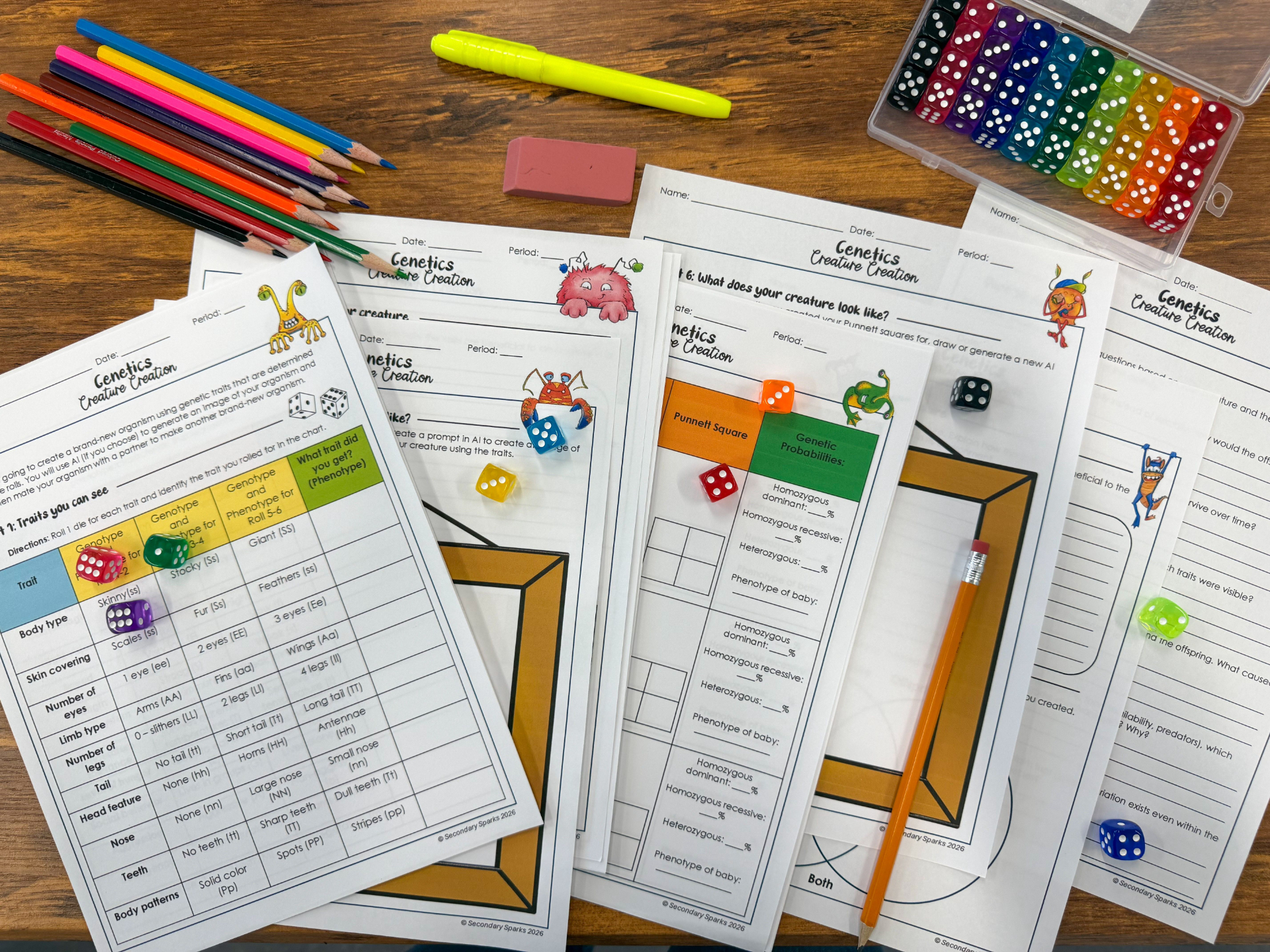
🔬Genetics Creature Creation Punnett Squares Activity
Reproduction of Organisms Teaching Tips
Make sure students understand that heterozygous = hybrid and homozygous = purebred. Lots of vocabulary in this unit can quickly confuse students!
Have students practice Punnett squares every day. Explicitly teach them how to do it, step-by-step. Mini white boards for each student works wonders for this!
Talk about probability and tie it in with math. Each square in the Punnett square represents 1/4 or 25%.
Discuss how pedigrees tell a genetic story about a trait through families. Talk about how you can predict future generations within a pedigree through Punnett Squares.
Make it fun! The Genetic Creature Creation activity is a student favorite!
DNA & Genetic Mutations Standards Alignment:
DNA and Genetic Mutations NGSS Standards
-
MS-LS3-1: Develop and use a model to describe how genetic information is stored and passed.
-
MS-LS3-2: Describe how mutations contribute to genetic variation.
DNA TEKS Standards
-
7.14(A): Define heredity and explain the role of DNA and genes.
-
7.14(C): Explain how genetic variation can occur.
Heredity and DNA Florida Standards
-
SC.7.L.16.1: Explain the role of DNA and genes in heredity.
-
SC.7.L.16.4: Recognize that genetic mutations can result in changes to traits.
8. Biotechnology and Artificial Selection
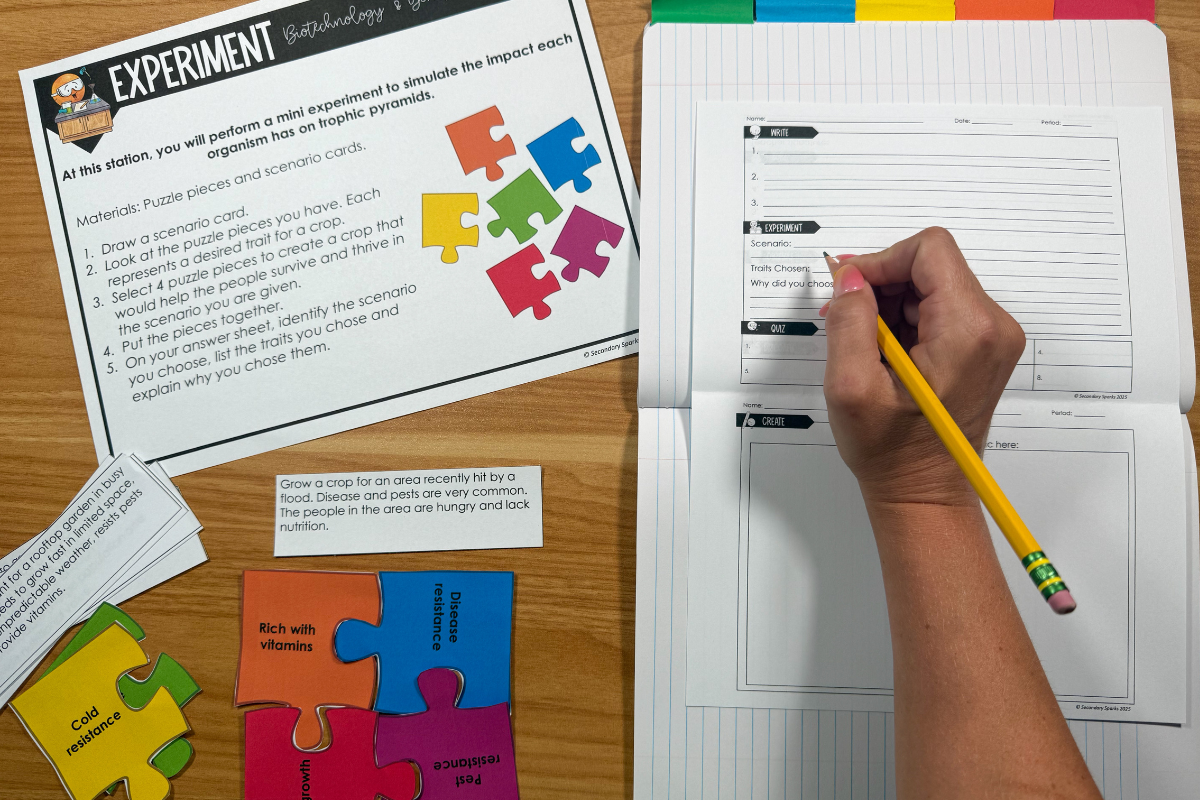
Biotechnology and artificial selection help students understand how humans influence genetic traits in organisms. In these middle school life science lessons, students explore topics such as genetic engineering, selective breeding, GMOs, cloning, and CRISPR technology. These biotechnology activities for middle school include real-world applications and ethical discussions that help students understand how science is used to solve problems and impact society.
What to Teach
⭐ Biotechnology
⭐ Genetic Engineering
⭐ Cloning
⭐ GMOs
⭐ CRISPR Cas9
⭐ Gene Therapy
⭐ Artificial selection (selective breeding)
Artificial Selection and Biotechnology Teaching Resources
🔬Artificial Selection and Biotechnology Guided Notes and Assessment
🔬Artificial Selection and Biotechnology Task Cards
🔬Artificial Selection and Biotechnology Stations
🔬Artificial Selection and Biotechnology Warm Ups/Exit Tickets
🔬Artificial Selection and Biotechnology Choice Board Activity
🔬Artificial Selection and Biotechnology Activities for Google Slides
Artificial Selection and Biotechnology Teaching Tips
The main focus of this unit is to briefly explore types of biotechnology and artificial selection.
Discuss on how these methods impact individuals, society and the environment.
NGSS standards emphasizes on knowledge of CRISPR.
This is usually a shorter unit!
Biotechnology & Artificial Selection Standards Alignment:
Biotechnology NGSS Standards
-
MS-LS4-5: Gather and synthesize information about how humans influence the inheritance of desired traits in organisms.
Biotechnology TEKS Standards
-
7.14(E): Describe how selective breeding results in desired traits.
-
7.14(F): Identify and explain applications of biotechnology.
Biotechnology Florida Standards
-
SC.7.L.16.5: Explain how biotechnology can be used to improve organisms and solve real-world problems.
9. Evolution and Natural Selection
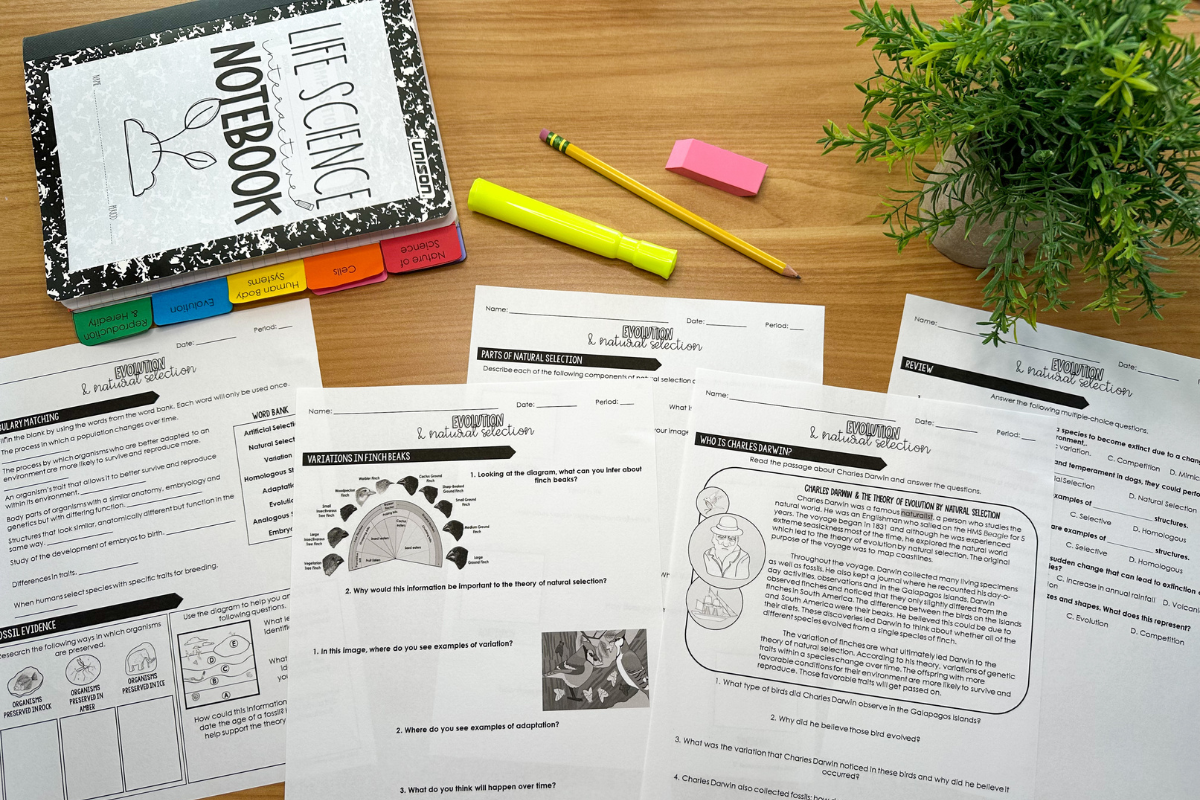
Evolution and natural selection help students understand how species change over time. In these middle school evolution lessons, students explore concepts such as adaptations, variation, survival of the fittest, and evidence for evolution including fossils and comparative anatomy. Through engaging natural selection activities for middle school, students analyze how environmental pressures lead to changes in populations over time.
What to Teach
⭐ Charles Darwin
⭐ Theory of Evolution
⭐ Natural Selection
⭐ Variations and Types of Adaptations
⭐ Extinction
⭐ Homologous, Analogous and Vestigial Structures
⭐ Developmental Biology (Embryos) as
⭐ Evidence for evolution
⭐Molecular biology (DNA) as evidence for Evolution
⭐ Types of Fossils
⭐ Geologic Time Scale
⭐ Absolute vs Relative Dating
Natural Selection and Evolution Teaching Resources
🔬Natural Selection and Evolution Guided Notes and Assessment
🔬Natural Selection and Evolution Task Cards
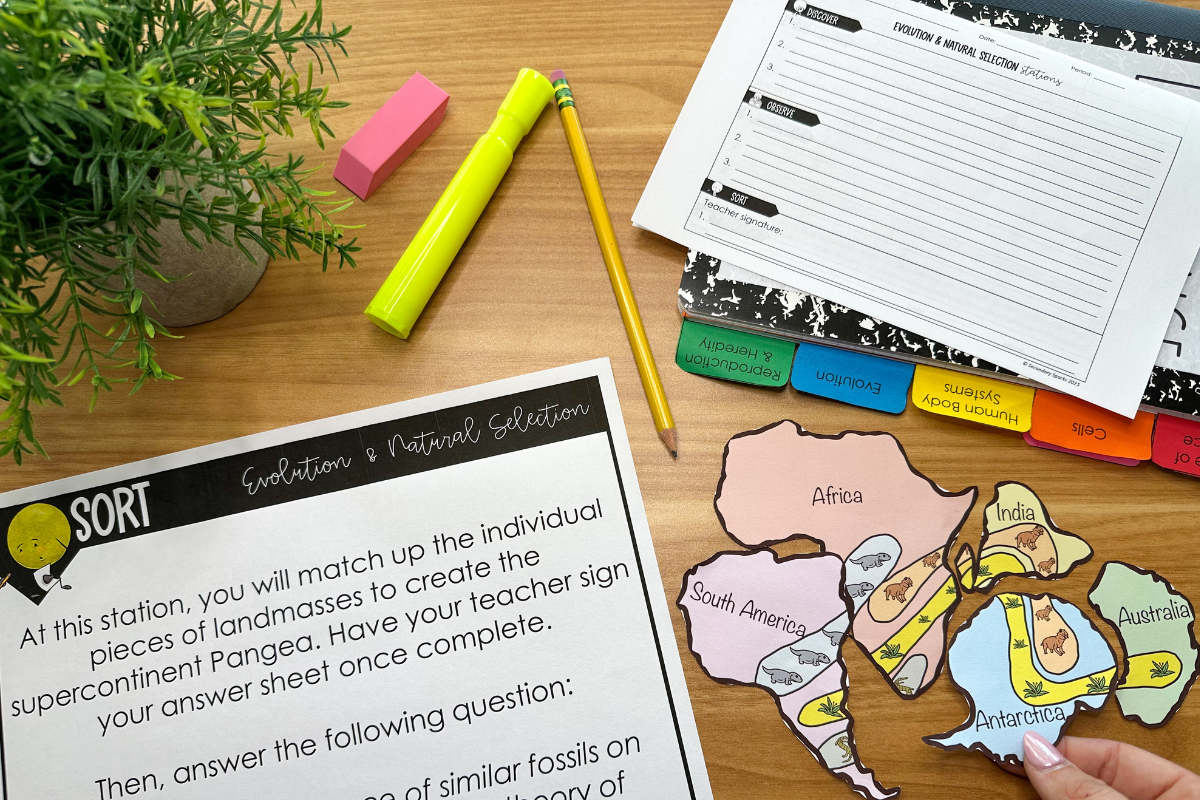
🔬Natural Selection and Evolution Stations
🔬Natural Selection and Evolution Warm Ups/Exit Tickets
🔬Natural Selection and Evolution Choice Board Activity
🔬Natural Selection and Evolution Activities for Google Slides
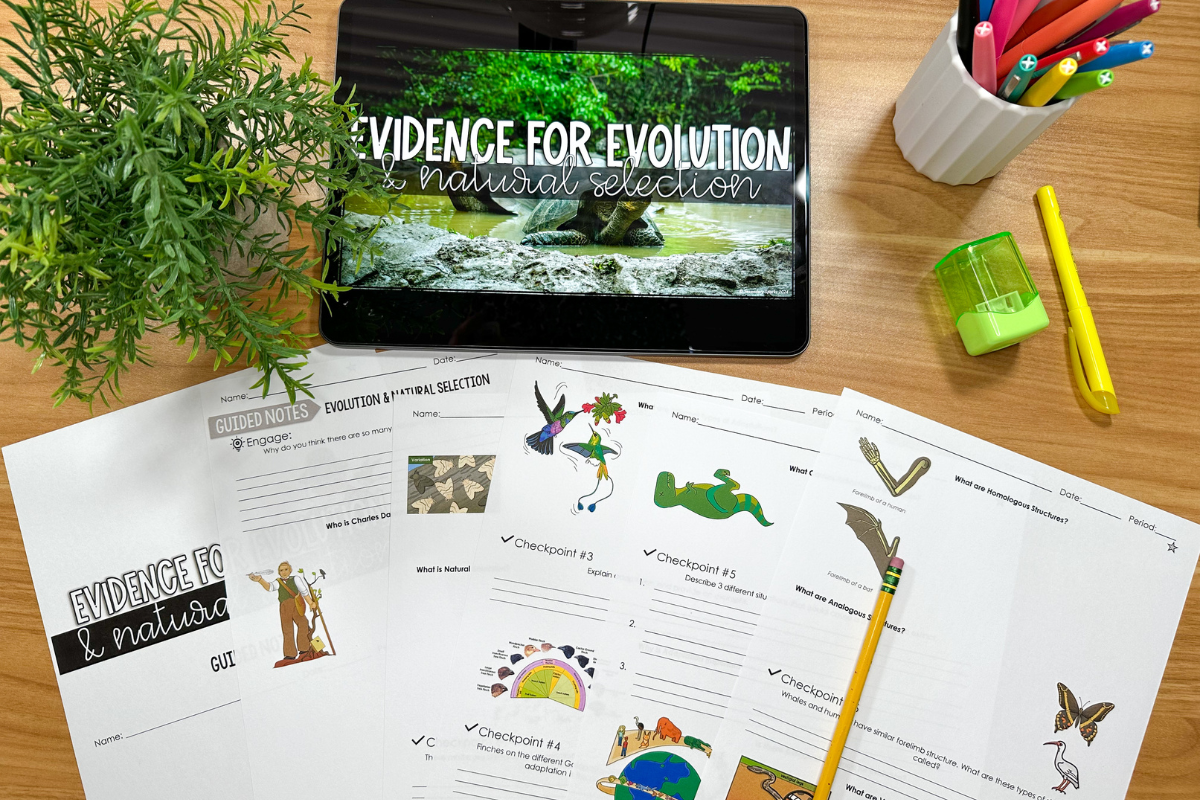
Natural Selection and Evolution Teaching Tips
Keep it visual, interactive and hands-on as this can be a very abstract topic for middle school science students.
Emphasize that populations evolve, not individuals.
Organisms cannot simply "choose" to evolve.
Great real-world examples include:
-
Antibiotic-resistant bacteria
-
Darwin’s finches
-
Pesticide-resistant insects
Evolution & Natural Selection Standards Alignment:
Natural Selection NGSS Standards
-
MS-LS4-2: Apply scientific ideas to construct an explanation for how natural selection leads to changes in populations.
-
MS-LS4-4: Construct an explanation based on evidence that describes how genetic variations lead to differences in survival and reproduction.
-
MS-LS4-6: Use mathematical representations to support explanations of how natural selection affects populations over time.
Natural Selection TEKS Standards
-
7.13(A): Describe how natural selection leads to adaptation.
-
7.13(B): Explain how traits can increase survival and reproduction.
-
7.13(C): Analyze fossil evidence and patterns of change over time.
Evolution Florida Standards
-
SC.7.L.15.2: Explore the theory of evolution by natural selection.
-
SC.7.L.15.3: Recognize that adaptations can increase survival.
-
SC.7.L.15.1: Identify evidence supporting evolutionary theory.
10. Taxonomy and Classification
Taxonomy and classification help students understand how scientists organize and group living organisms. In these middle school life science lessons, students explore classification systems, levels of organization (domain to species), and the use of dichotomous keys. These classification activities for middle school help students identify patterns, compare organisms, and understand how classification reflects evolutionary relationships.
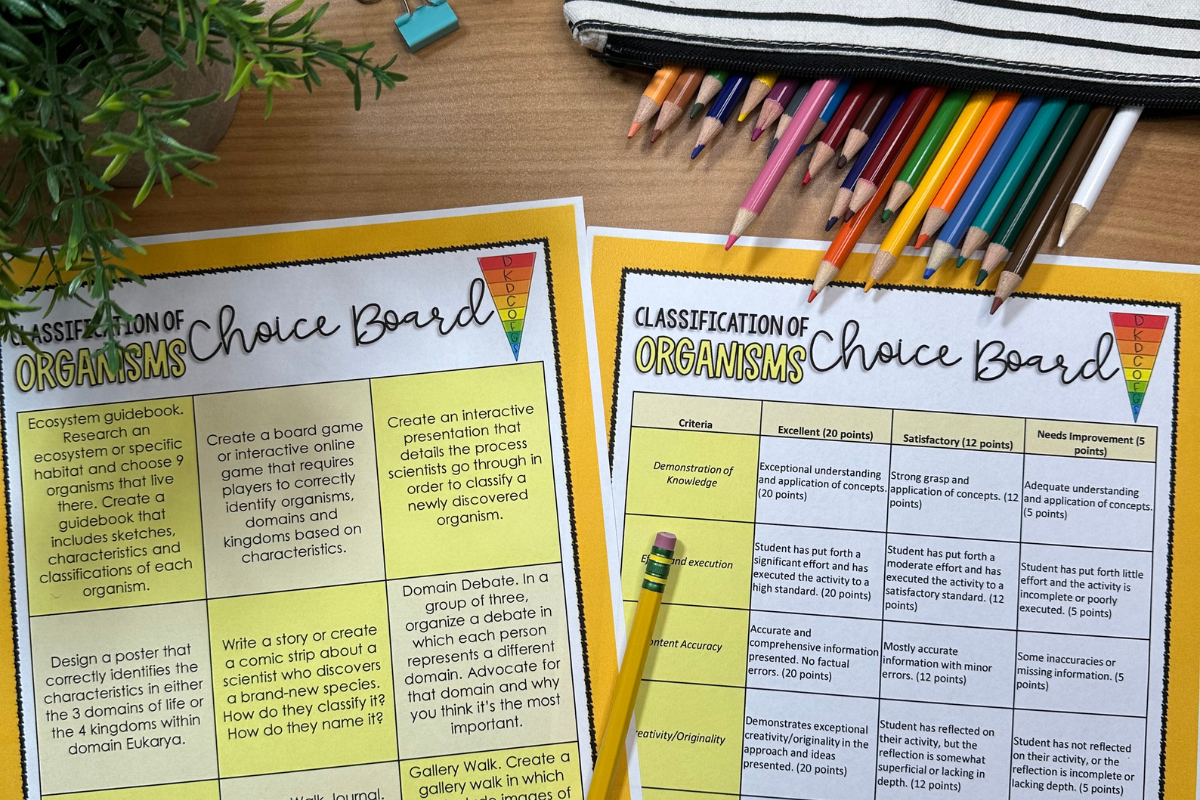
What to Teach
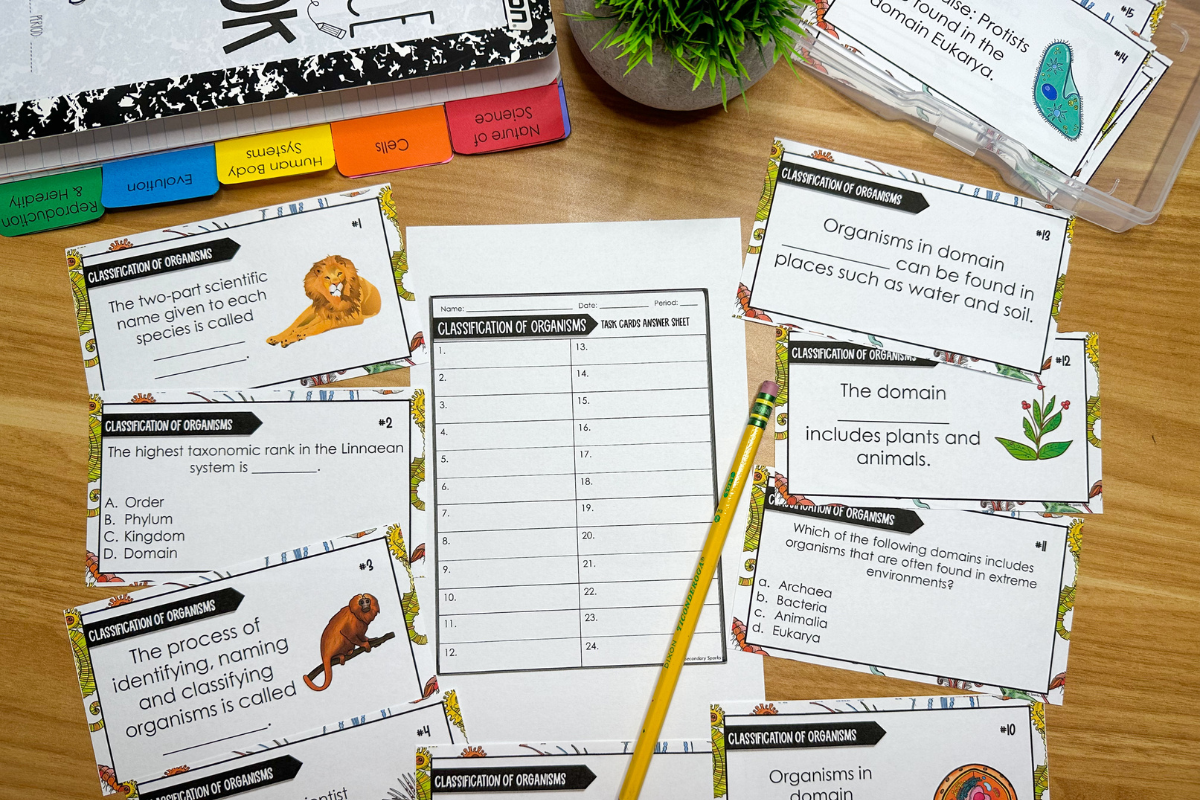
⭐Vocabulary (Species, Archaea, Bacteria, Protista, Plantae, Animalia, Domain, Eukarya, Fungi)
⭐Carlous Linnaeus
⭐Binomial nomenclature
⭐Scientific names
⭐ Levels of classification: domain, kingdom, phylum, class, order, family, genus, species)
⭐ Characteristics of Eukarya, Bacteria and Archaea
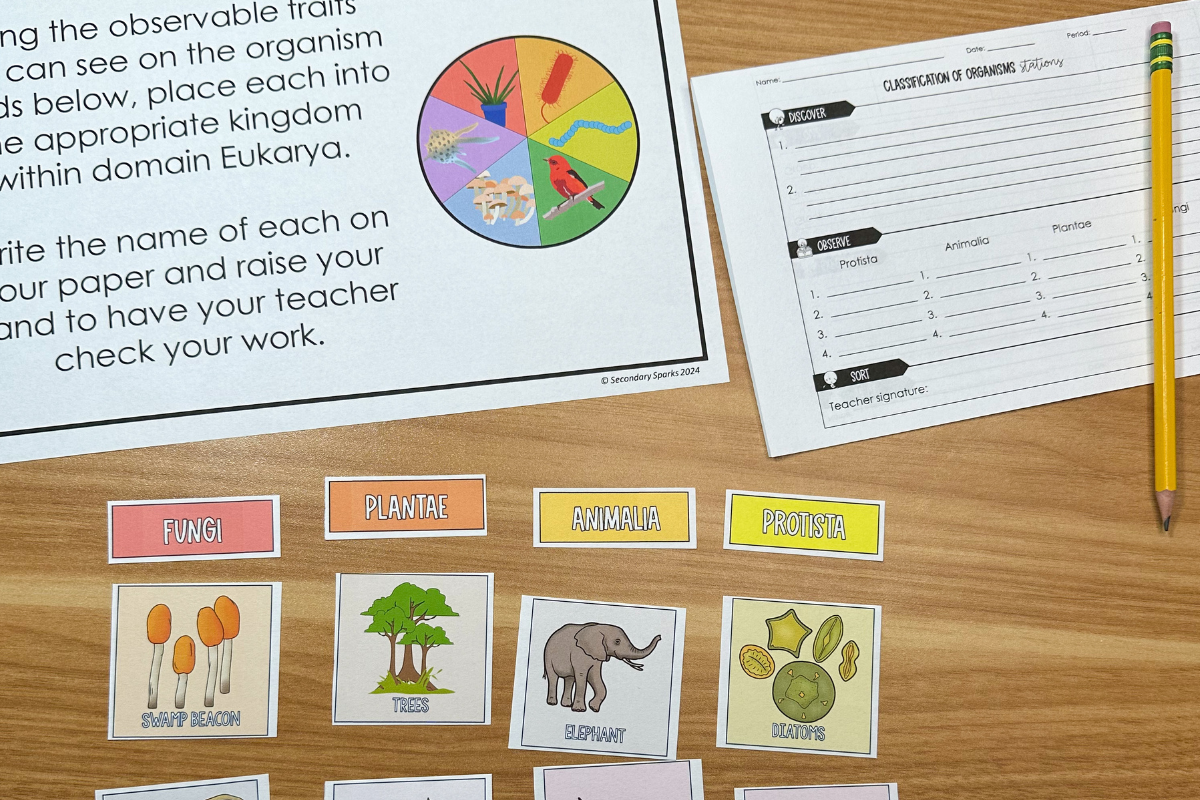
⭐Organisms that belong in Domain Eukarya. Organizing by Kingdom: Protista, Fungi, Plantae and Animalia
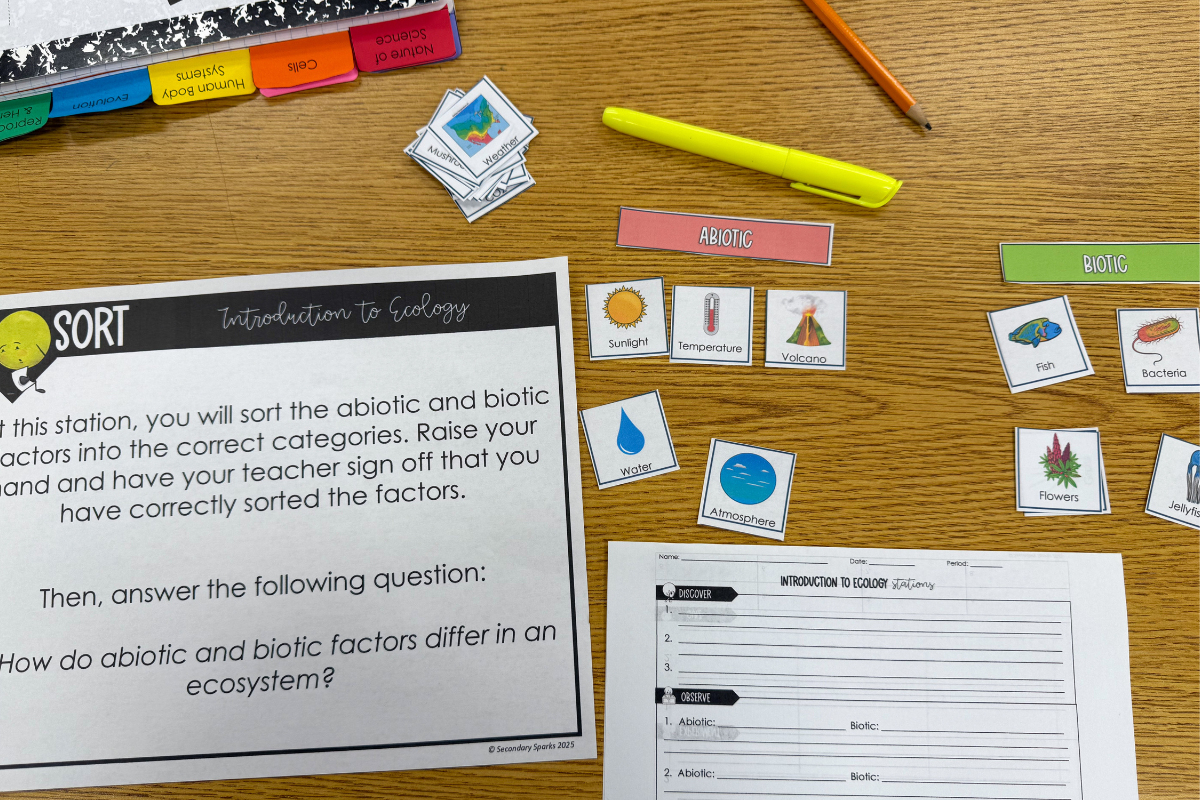
Introduction to Ecology Teaching Resources
🔬Ecology Guided Notes and Assessment
🔬Ecosystems Task Cards
🔬Ecology Stations
🔬Ecosystems Warm Ups/Exit Tickets
🔬Ecology Choice Board Activity
🔬Introduction to Ecology Activities for Google Slides
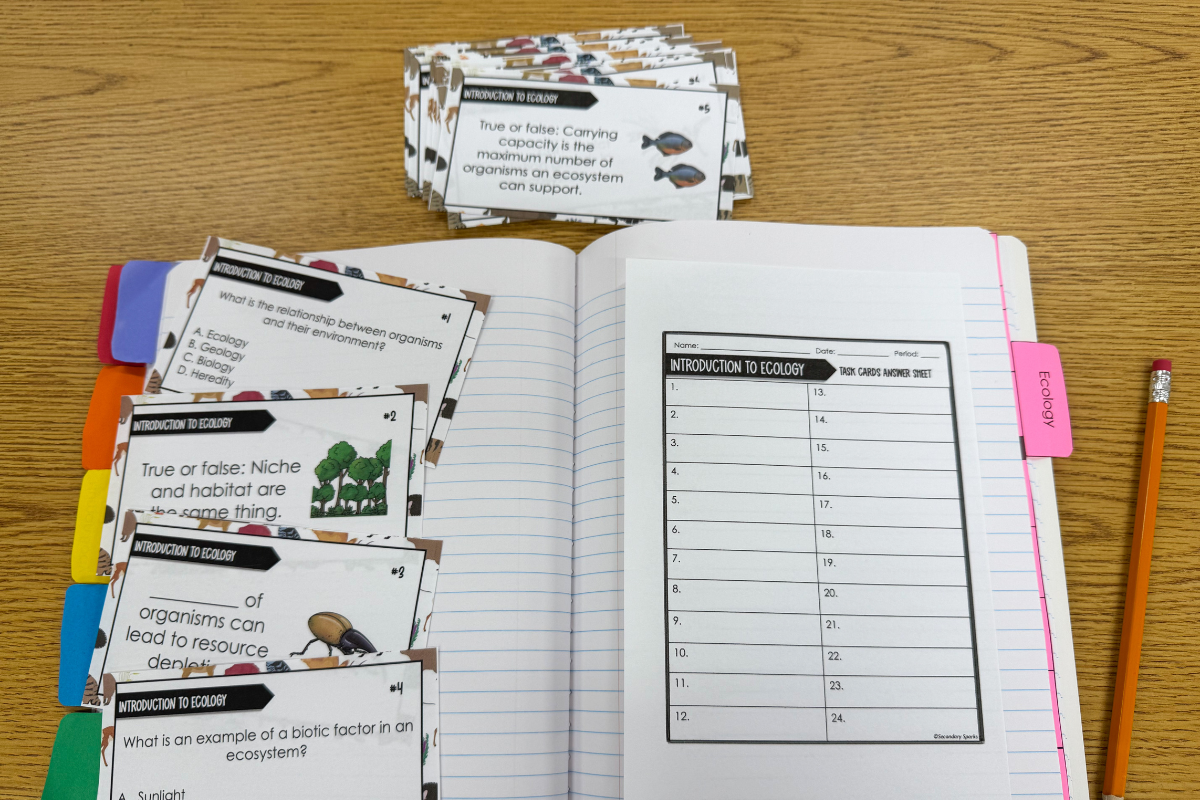
Taxonomy and Classification Teaching Tips
Have students group organisms and describe why they grouped them that way. It gets them thinking about how the process works.
Instead of memorization, show how classification narrows down.
Example using animals:
Domain → Eukarya
Kingdom → Animalia
Phylum → Chordata
Class → Mammalia
Order → Carnivora
Family → Felidae
Genus → Panthera
Species → Panthera leo
Taxonomy & Classification Standards Alignment
Classification NGSS Standards
-
MS-LS4-2: Construct explanations based on patterns in organisms.
Classification TEKS Standards
-
7.12(F): Classify organisms based on shared characteristics.
Classification Florida Standards
-
SC.7.L.15.1: Classify organisms based on shared characteristics and evolutionary relationships.
11. Introduction to Ecology
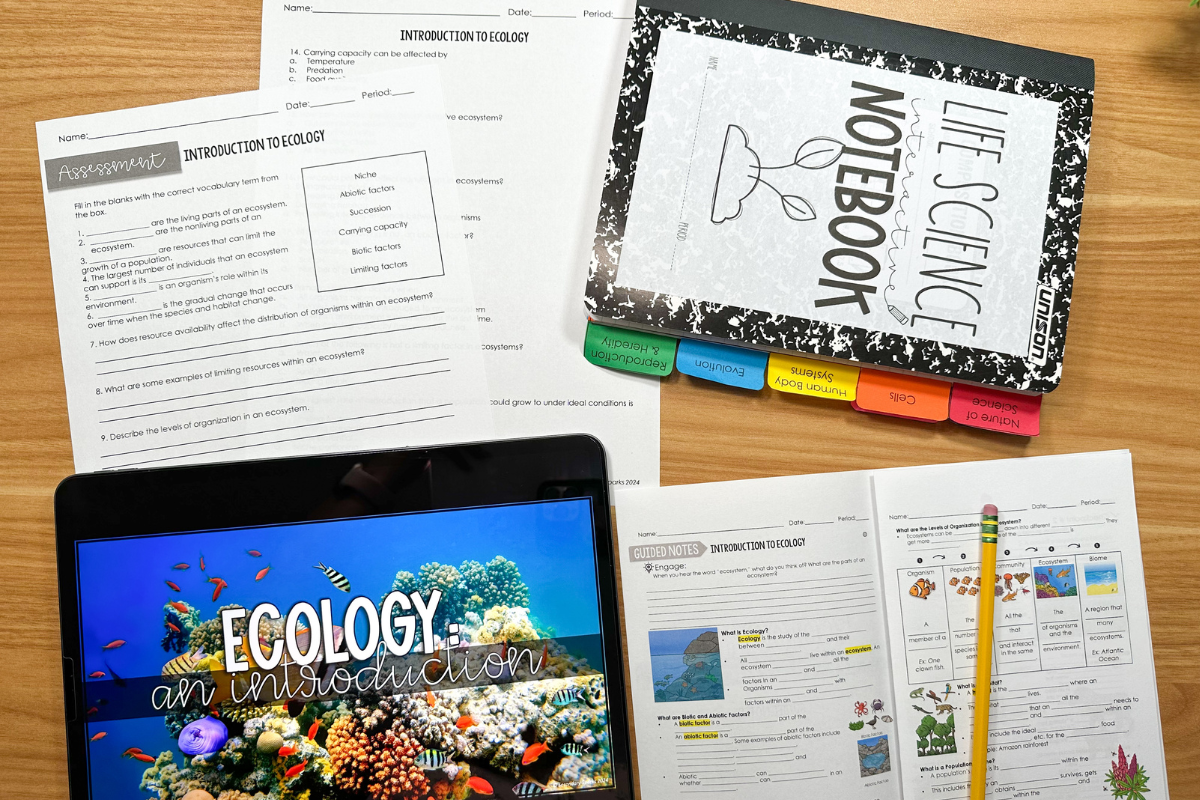
Introduction to ecology helps students understand how organisms interact with each other and their environment. In these middle school ecology lessons, students explore ecosystems, habitats, populations, communities, and environmental factors. Through engaging ecology activities for middle school, students investigate how living and nonliving components work together to support life.
What to Teach
⭐ What is Ecology?
⭐ What is an Ecosystem?
⭐ Abiotic and biotic factors
⭐ Levels of organization in an ecosystem
⭐ Habitats
⭐ Niche
⭐ Succession (primary vs secondary)
⭐ Limiting factors
⭐ Carrying capacity
⭐ Biotic potential
Introduction to Ecology Teaching Resources
🔬Introduction to Ecology Guided Notes and Assessment
🔬Introduction to Ecology Task Cards
🔬Introduction to Ecology Stations
🔬Introduction to Ecology Warm Ups/Exit Tickets
🔬Introduction to Ecology Choice Board Activity
🔬Introduction to Ecology Activities for Google Slides
Introduction to Ecology Teaching Tips
Discuss how everything is connected. I reference the Lion King and "Circle of Life" during this unit since many students have seen the movie and love it!
Review abiotic vs biotic factors and how they influence ecosystems.
Students understand ecology better when concepts are introduced from small to large.
Teach these in order:
-
Organism – one living thing
-
Population – same species in one area
-
Community – different populations together
-
Ecosystem – living + nonliving things
-
Biome – large climate region
-
Biosphere – all ecosystems on Earth
Introduction to Ecology Standards Alignment
Ecology NGSS Standards
-
MS-LS2-1: Analyze and interpret data to provide evidence for the effects of resource availability on organisms.
-
MS-LS2-2: Construct an explanation that predicts patterns of interactions among organisms.
Ecology TEKS Standards
-
7.10(A): Describe biotic and abiotic factors.
-
7.12(E): Describe interactions in ecosystems.
Ecology Florida Standards
-
SC.7.L.17.1: Describe relationships among organisms in ecosystems.
-
SC.7.L.17.2: Explain how environmental factors affect organisms.
12. Symbiosis and Competition
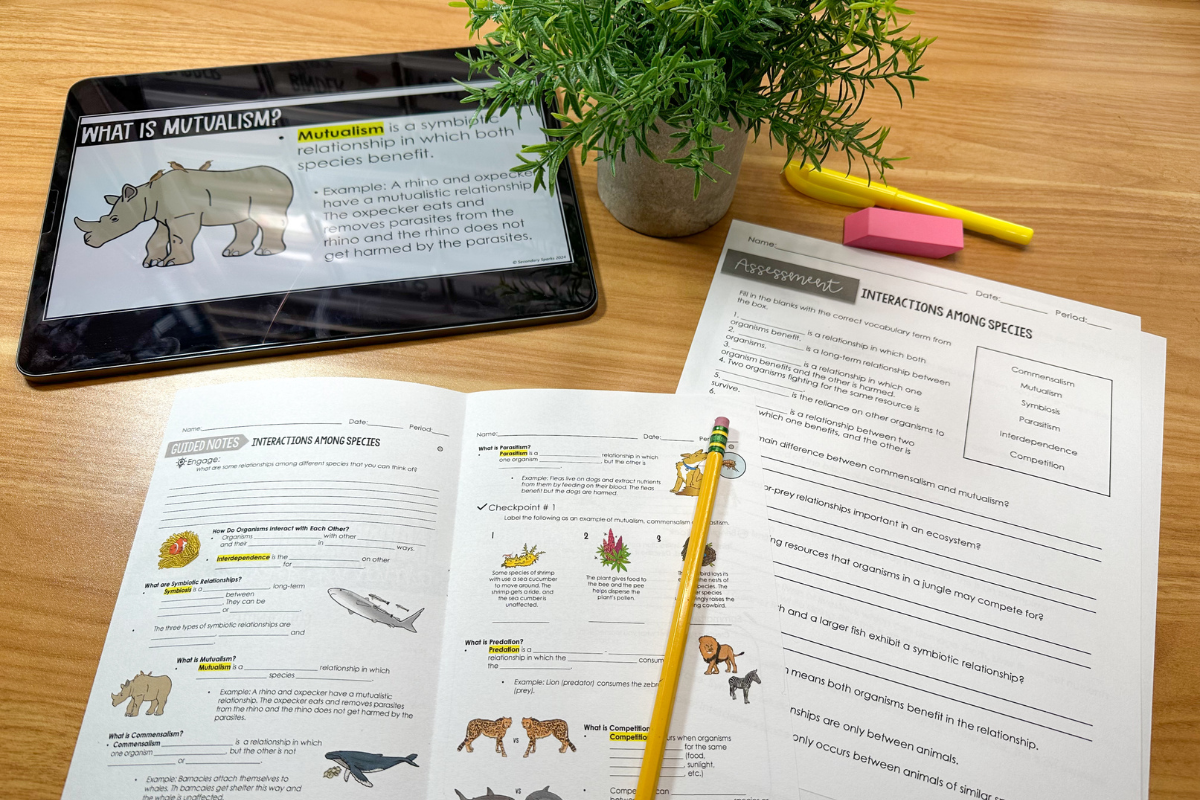
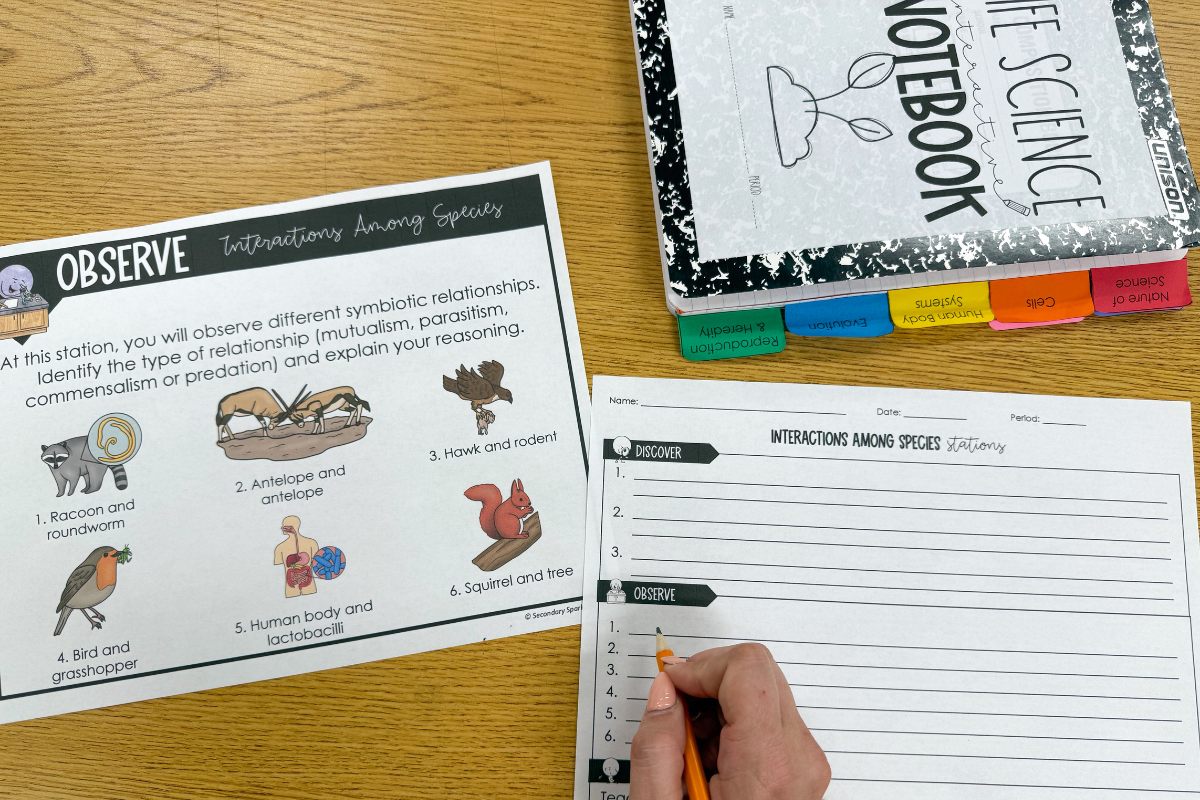
Symbiosis and competition help students understand the relationships between organisms in an ecosystem. In these middle school ecology lessons, students explore types of symbiotic relationships such as mutualism, commensalism, and parasitism, as well as competition for limited resources. Through engaging symbiosis activities for middle school and real-world examples, students analyze how interactions between organisms affect survival and ecosystem balance.
What to Teach
⭐ Interdependence
⭐ Mutualism
⭐ Commensalism
⭐ Parasitism
⭐ Predation
⭐ Competition
Symbiotic Relationships Teaching Resources
🔬Symbiotic Relationships Guided Notes and Assessment
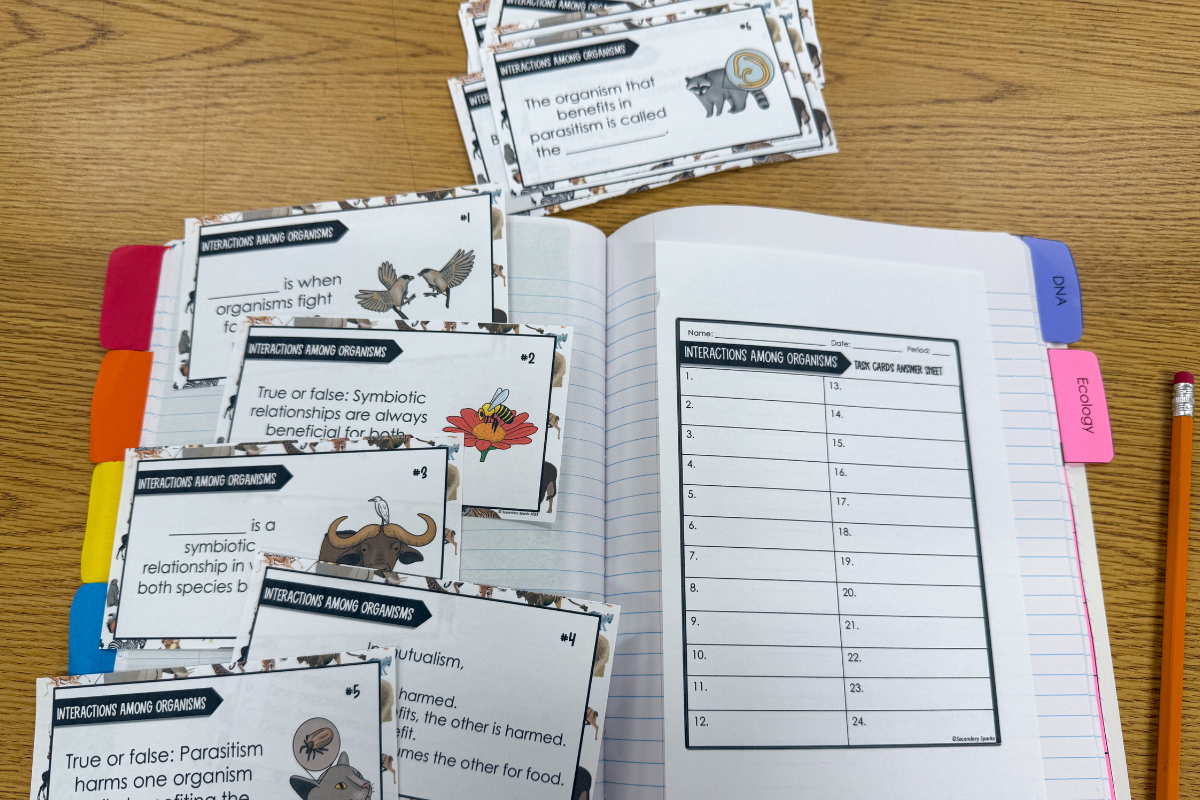
🔬Ecological Relationships Task Cards
🔬Symbiosis Stations
🔬Interactions Among Organisms Warm Ups/Exit Tickets
🔬Ecological Relationships Choice Board Activity
🔬Mutualism Commensalism Parasitism Activities for Google Slides
Symbiosis Teaching Tips
Have students label each relationship with:
(+/+) mutualism
(+/0) commensalism
(+/–) parasitism
(Sometimes I even use emojis for this!)
Give a TON of scenarios! This is what they will usually see during standardized testing!
Relationships Among Organisms Standards Alignment:
Symbiosis NGSS Standards
-
MS-LS2-1: Analyze the effects of resource availability on organisms.
-
MS-LS2-2: Predict interactions among organisms across multiple ecosystems.
Symbiosis TEKS Standards
-
7.12(E): Analyze relationships among organisms including competition and symbiosis.
Symbiosis Florida Standards
-
SC.7.L.17.2: Investigate and explain symbiotic relationships.
-
SC.7.L.17.1: Identify limiting factors and competition in ecosystems.
13. Food Webs in Ecosystems
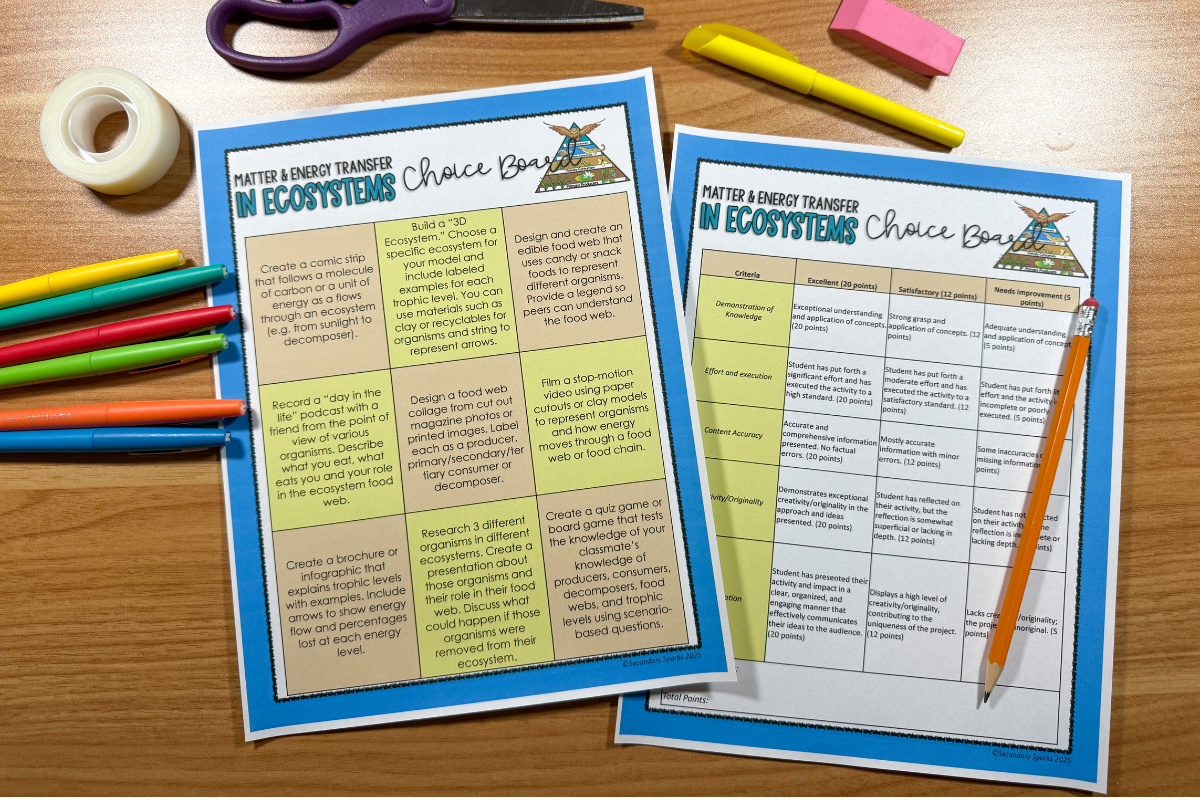
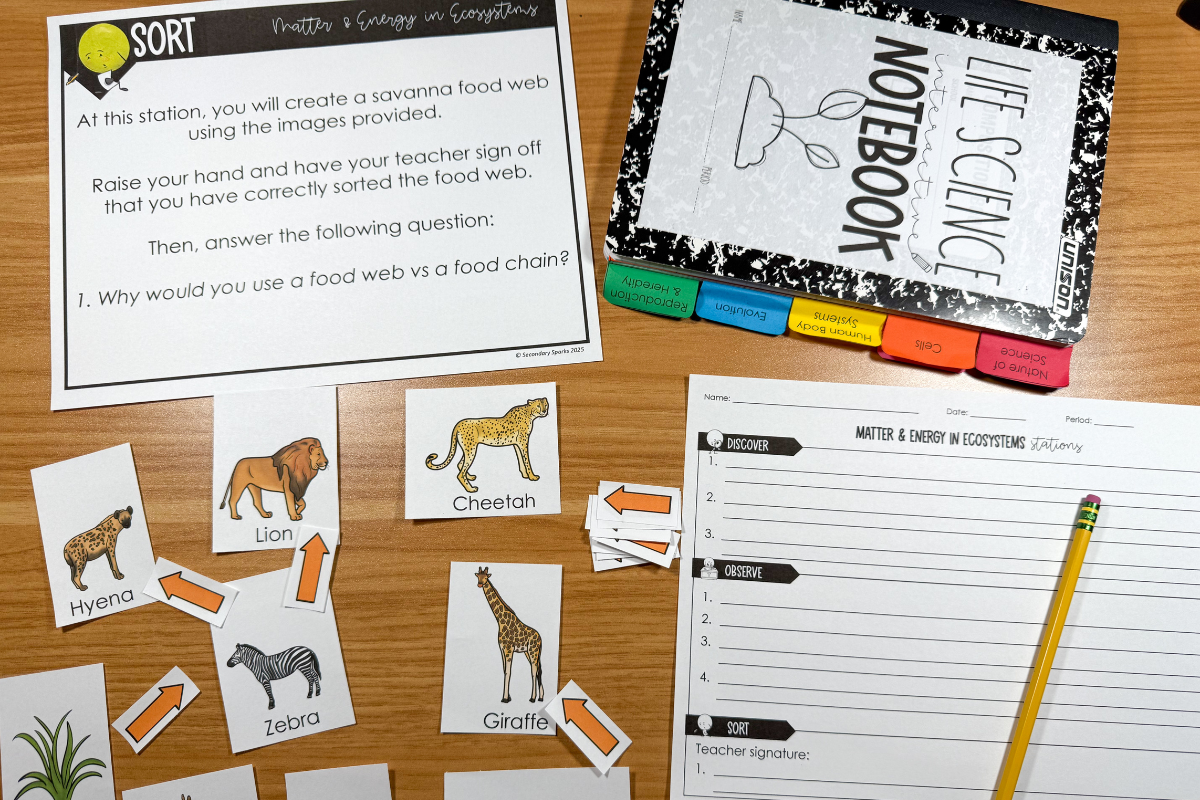
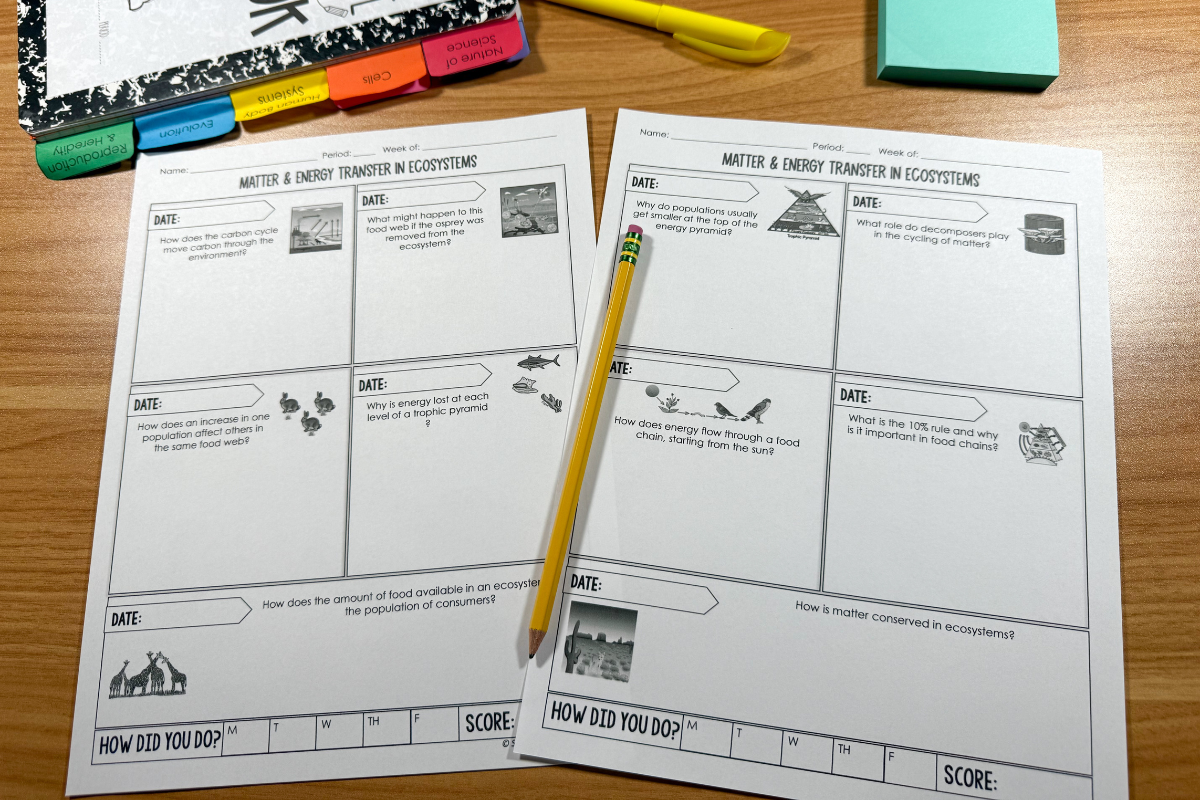
Matter and energy transfer in ecosystems help students understand how energy flows through living systems. In these middle school ecosystem lessons, students explore food chains, food webs, energy pyramids, producers, consumers, and decomposers. These energy flow activities for middle school include hands-on models and investigations that help students visualize how energy moves through ecosystems and why it decreases at each level.
What to Teach
⭐ Producers
⭐ Decomposers
⭐ Consumers
⭐ Food web
⭐ Energy Pyramid
⭐ Food chain
⭐ 10% Rule
⭐ Carbon Cycle
Matter and Energy Transfer in Ecosystems Teaching Resources
🔬Food Webs Guided Notes and Assessment
🔬Energy Pyramids and Food Webs Task Cards
🔬Food Chains and Food Webs Stations
🔬Matter and Energy Transfer in Ecosystems Warm Ups/Exit Tickets
🔬Ecological Food Webs Choice Board Activity
🔬Food Chains and Food Webs Activities for Google Slides
Matter Transfer & Food Webs Teaching Tips
Constantly ask:
“Where did this organism get its energy?”
Where does this matter go next?”
-
Example:
Hawk → snake → mouse → plant → sun
Build food chains BEFORE food webs
Start small:
3–4 organism chains. Then expand into food webs
Connect to students’ real life
- Ask: “Where did YOUR energy come from this morning?”
- Trace it back: Student → food → plant/animal → sun
Matter & Energy Transfer In Ecosystems Standards Alignment
Flow of Energy in Ecosystems NGSS Standards
-
MS-LS2-3: Develop a model to describe the cycling of matter and flow of energy among living and nonliving parts of an ecosystem.
-
MS-LS1-6: Construct a scientific explanation based on evidence for the role of photosynthesis in the cycling of matter and flow of energy.
Food Chains TEKS Standards
-
7.10(B): Describe how energy flows through ecosystems.
-
7.10(C): Model food chains and food webs.
Food Webs Florida Standards
-
SC.7.L.17.2: Explain energy flow in ecosystems.
-
SC.7.L.17.3: Describe food webs and energy pyramids.
14. Photosynthesis and Cellular Respiration
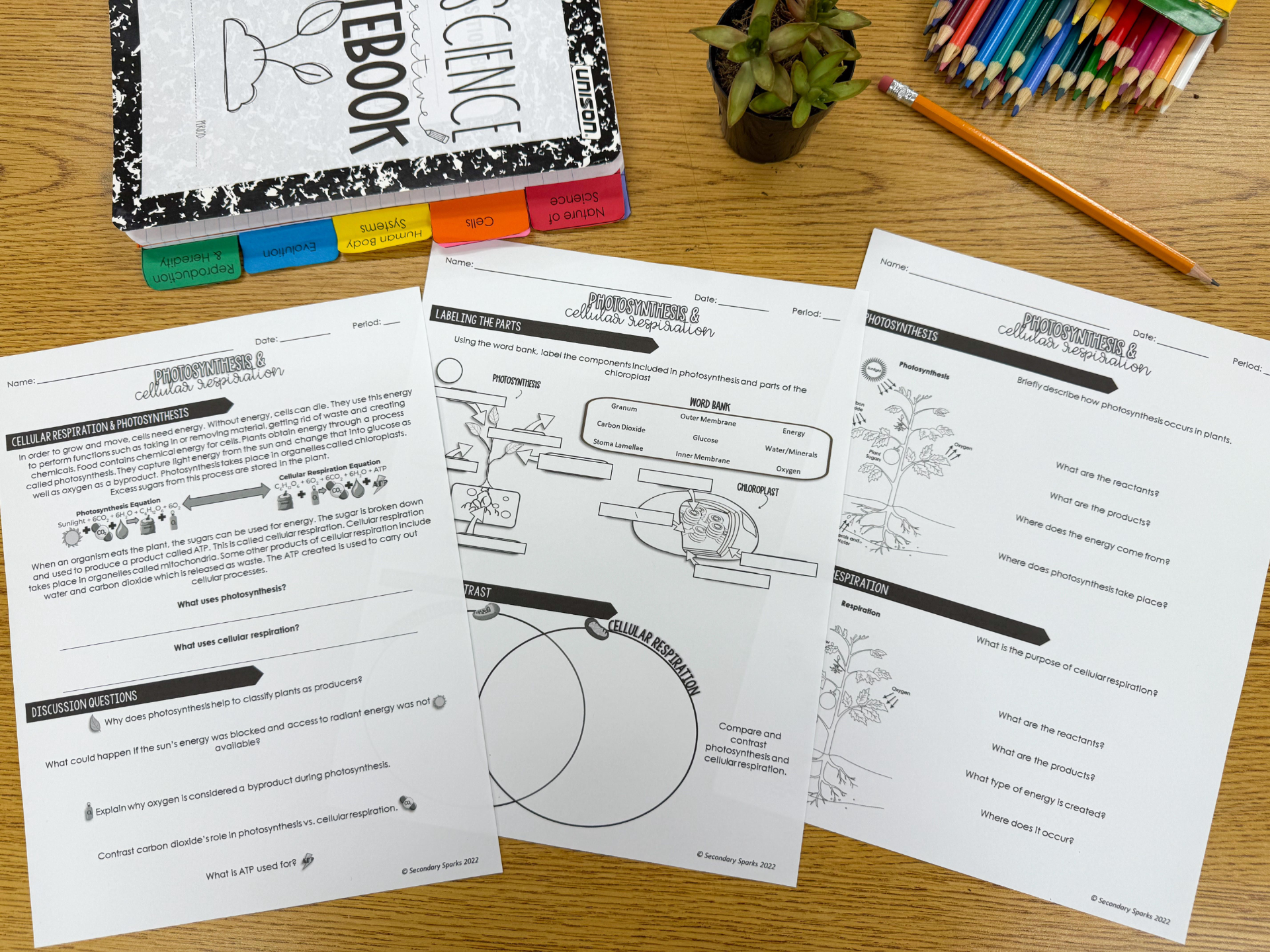
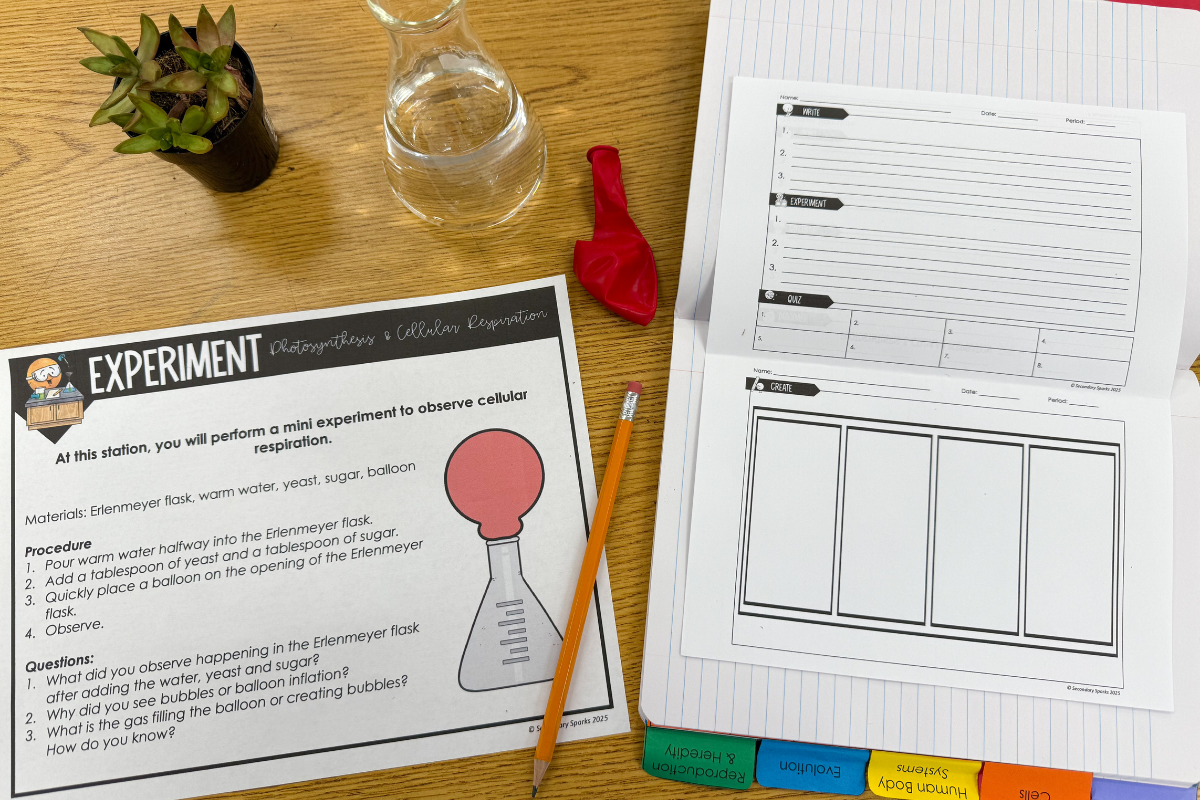
Photosynthesis and cellular respiration help students understand how energy flows through living organisms. In these middle school life science lessons, students explore how plants use sunlight, carbon dioxide, and water to produce glucose and oxygen through photosynthesis, and how cells break down glucose using oxygen to release energy through cellular respiration. Through engaging photosynthesis and cellular respiration activities for middle school, labs, and interactive models, students learn how these two processes are interconnected and essential for life on Earth.
What to Teach
⭐ Reactants and products of photosynthesis
⭐ Reactants and products of cellular respiration
⭐ Role of Chloroplasts and mitochondria
⭐ Comparing and contrasting cellular respiration and photosynthesis
Cellular Respiration and Photosynthesis Teaching Resources
🔬Cellular Respiration and Photosynthesis Guided Notes and Assessment
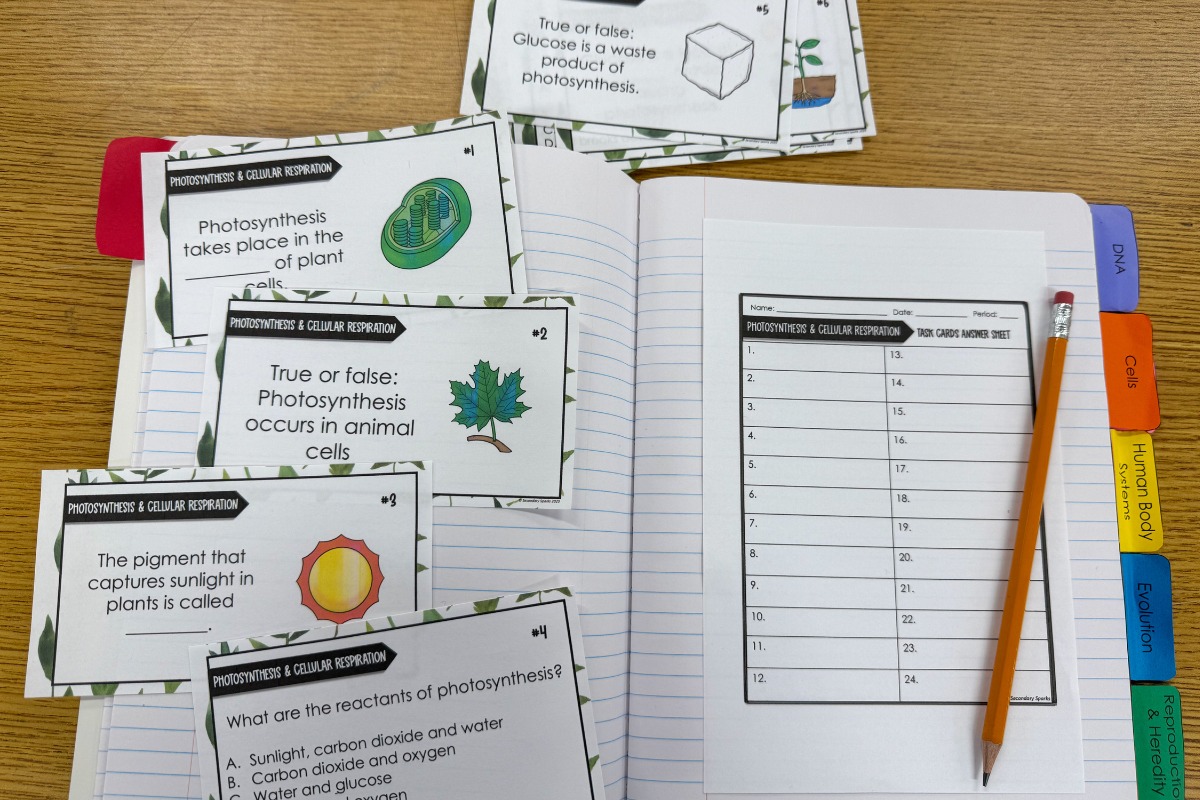
🔬Cellular Respiration and Photosynthesis Task Cards
🔬Cellular Respiration and Photosynthesis Stations
🔬Cellular Respiration and Photosynthesis Warm Ups/Exit Tickets
🔬Cellular Respiration and Photosynthesis Choice Board Activity
🔬Cellular Respiration and Photosynthesis Activities for Google Slides
Cellular Respiration and Photosynthesis Teaching Tips
Cellular respiration and photosynthesis work with each other to cycle carbon in the atmosphere!
Help students see the connection first:
“Photosynthesis stores energy, cellular respiration releases energy.”
Label inputs and outputs with arrows
Connect to things they already understand:
-
Food = stored energy (glucose)
-
Breathing = oxygen for energy release
-
Plants = “solar panels” for energy
Photosynthesis and Cellular Respiration Standards Alignment
Photosynthesis NGSS Standards
-
MS-LS1-6: Construct a scientific explanation based on evidence for the role of photosynthesis in the cycling of matter and flow of energy into and out of organisms.
-
MS-LS1-7: Develop a model to describe how food is rearranged through chemical reactions forming new molecules that support growth and/or release energy as this matter moves through an organism.
Cellular Respiration and Photosynthesis TEKS Standards
-
7.9(A): Compare and contrast photosynthesis and cellular respiration and explain how they are related.
-
7.9(B): Describe the role of photosynthesis in converting light energy into chemical energy and cellular respiration in releasing energy from food.
Photosynthesis Florida Standards
-
SC.8.L.18.1: Describe and investigate the process of photosynthesis, including the roles of light energy, carbon dioxide, water, and chlorophyll, and the production of glucose and oxygen.
-
SC.8.L.18.2: Describe and investigate how cellular respiration breaks down glucose to release energy for cellular activities.
Frequently Asked Questions
What grade level(s) is this curriculum designed for?
What standards does this curriculum align with?
Is this a complete curriculum?
Can I use this as my primary curriculum?
How much prep work is required?
What types of activities are included?
Will this work for different learning levels?
Do I need special lab equipment?
Can I use this in a digital classroom?
What happens when new resources are added?
Get the Life Science Curriculum
Ready to simplify your planning with a complete Middle School Life Science Curriculum? Get instant access to engaging life science lessons, labs, activities, assessments, and teaching resources designed to save you time and keep students engaged all year long.
Life Science Curriculum